
By Neha Chandelier, Co-founder of Listadum · Last updated: August 2026 · 14 min read
Quick answer: The best digital products to sell on Etsy in 2026 are planners, editable templates (Canva, resume, spreadsheet), printable wall art, SVG and clip art, education printables, and creator tools like presets. But the category only gets you in the door. The specific sub-niche is the product. This guide is a data-backed menu of what to make, ranked by real demand against real competition, so you pick something you can actually win.
Search “digital products to sell on Etsy” and every list hands you the same twenty ideas: planners, wall art, SVGs, templates. You pick one, you list it, and then you wait. For most sellers, nothing happens. I know that quiet exactly, because it was my first year on Etsy, and it is most of the sellers I have talked to since.
The lists are not wrong about what sells. They just skip the part that decides whether you ever make a dime: can a brand-new shop actually get found selling it? A budget planner moves thousands of copies a month on Etsy. It also has tens of thousands of other budget planners sitting in the results ahead of yours.
So the question buried inside “what should I sell” is narrower than it looks. Not what makes money, but which of those things a shop your size can still break into.
That is what I built this guide to answer. It is a menu, not a list. Every category comes with its real demand, an honest read on how crowded it is, and the specific angle that beats the generic version. I pulled fresh numbers and the current top sellers for each one, so you are choosing on data instead of a hunch. Once you have picked, the how to sell digital products on Etsy guide covers pricing, mockups, and delivery. This page is about choosing right.
How to read this list: demand vs competition
Every “best digital products” article throws view counts at you. Views alone are a trap. A category with huge demand and brutal competition is a grind, not an opportunity.
What you actually want is the overlap of three things:
- Real demand. People are searching for it right now.
- Beatable competition. The category is not so locked up that a new shop cannot rank.
- Something only you can make. A specific angle, a style, or a buyer you understand.
Here is the whole digital-product category mapped on the first two. Up means more demand. Left means more winnable. The green pocket, top-left, is where a new listing has a real shot: strong demand, competition you can beat.
Notice what that does to the usual advice. “Digital planner” and “Canva template” have enormous demand, but they sit hard against the competition wall. Resume templates, spreadsheet templates, Notion templates, and Lightroom presets have real demand and more room. Same effort to make, very different odds.
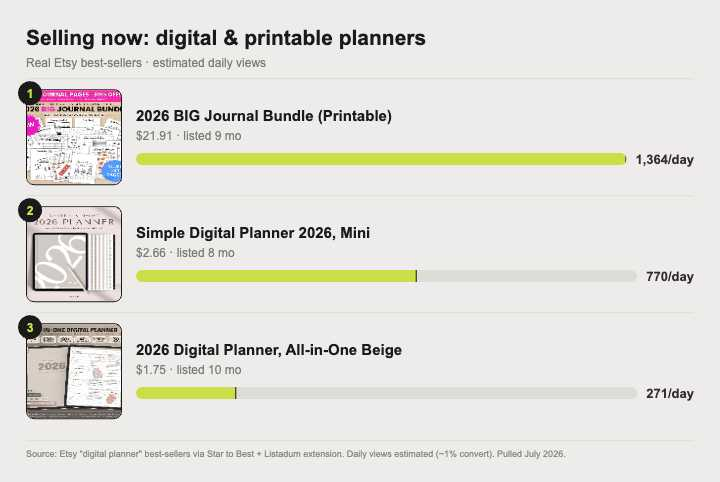
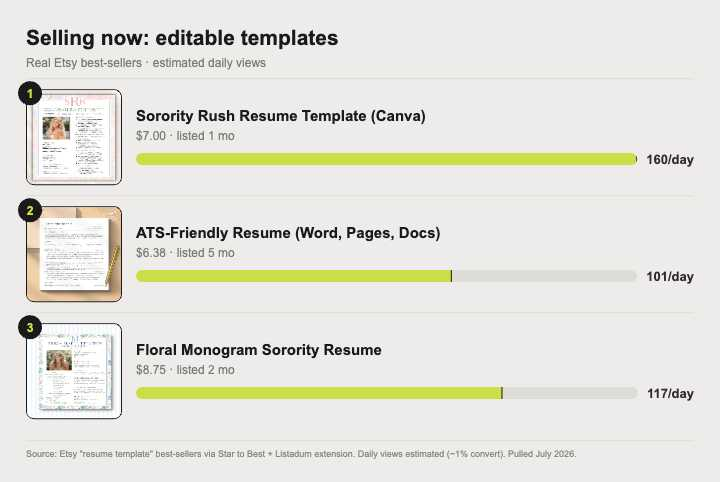
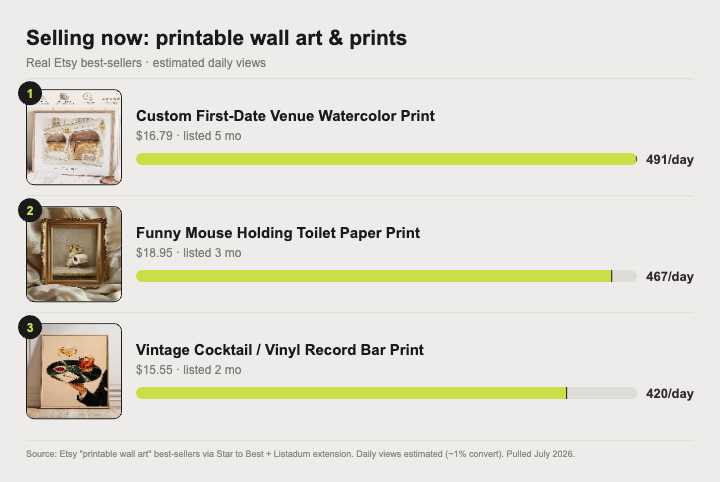
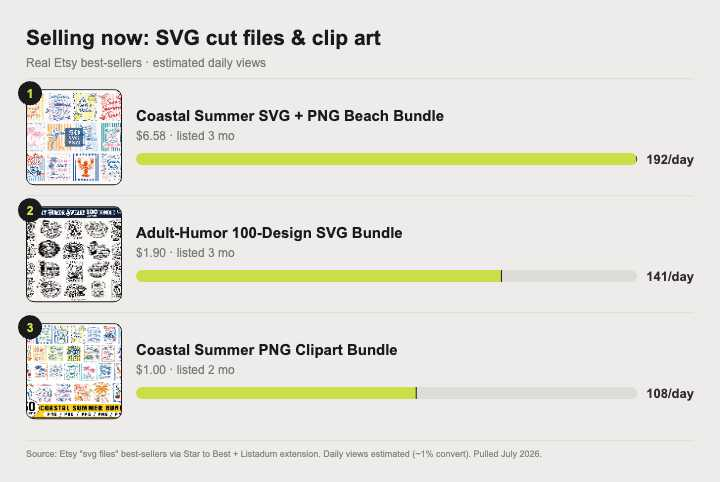
Keep that lens on as you read the menu below. For each category, I have pulled the real Etsy best-sellers so you can see what is actually moving, not just a claim. Those are the “selling now” panels under each section, ranked by estimated daily views (the Star-to-Best best-seller search plus the free Listadum extension, pulled July 2026). Now the products.
Digital and printable planners
Planners are the demand engine of the whole category. A top digital planner listing averages over 100,000 views, and GoodNotes planners are right behind it. Budget planners, meal planners, and ADHD planners all pull tens of thousands.
That demand is real, and so is the crowd. “Daily planner” or “budget planner” with no angle is a wall of identical grids. You win planners by building a system for one specific person, not a pretty template for everyone.
The specific versions that sell:
- Budget planner for irregular income (freelancers, tips, commission), not “budget planner.”
- ADHD and neurodivergent systems. ADHD planners average around 32,000 views per top listing with more breathing room than the generic term, and a loyal, word-of-mouth buyer.
- Meal planners with a real constraint: macro counting, diabetic-friendly, family-of-six batch cooking.
- Profession-specific planners: teacher planners (average price around $10) and nurse or shift-worker planners whose weeks are not Monday to Friday.
Price band runs about $5 to $12, higher for GoodNotes and multi-page systems. A focused printables guide is coming as part of this cluster; until then, the how-to guide covers the build.
Templates people edit: Canva, docs, and spreadsheets
This is the corner I would point most new sellers toward, because “editable” is worth more than “printable.” When a buyer can drop in their own text, photo, or brand, you are selling them their time back, and they will pay for it.
The demand is strong and, in several sub-types, more winnable than planners:
- Resume and CV templates. Around 43,000 average views per top listing, roughly $9, and one of the more beatable high-demand terms on Etsy.
- Spreadsheet templates (Google Sheets and Excel): budgets, trackers, small-business bookkeeping. Buyers want a working system, not a blank grid. About $9 to $10.
- Notion templates. Premium (around $13) and one of the least crowded high-demand pockets, though demand cooled a little through mid-2026, so enter with a specific use case, not a generic dashboard.
- Canva social templates, niched by industry. Not “Instagram templates,” but Instagram templates for realtors, for nail techs, for wedding photographers. Instagram template listings average around $12.
- Wedding templates and editable signs. A wedding welcome sign averages nearly $25 and is one of the fastest-rising terms in the set. Editable, printed by the buyer, high perceived value.
A focused guide to selling Canva templates is coming in this cluster. The lever across all of these: make it genuinely editable and aim it at one industry or occasion.
Free: the Trending Digital Products Report. Want the current data instead of a hunch? Our free report breaks down which digital products and sub-niches are climbing right now, with the demand behind each one, so you build around what is actually moving.
Printable wall art and digital prints
Printable wall art is the single biggest slice of the digital category, and it rewards a distinct style more than any other. Buyers are decorating a wall or a room, so they shop by feeling and by fit.
Two things separate the shops that sell:
- A recognizable style, not a grab bag. Botanical line art, moody abstract neutrals, vintage reproductions, a specific color story. One look, done well, across a cohesive set.
- In-context mockups. A framed print on a real wall answers the buyer’s “how will this look in my space” question far better than the flat file.
Framed as fine-art prints, you sell multiple sizes and lean on style-based search. Framed as personalized gifts (birth-flower prints, custom pet portraits), the same art commands more with almost no competition on the exact search. The full play is in the art and prints playbook.
SVG cut files and clip art
This is the quiet giant. SVG cut files and clip art are the most repeat-purchased digital products on Etsy, because crafters come back again and again for the next project.
The economics are different here. Prices are low, around $3 to $4, so you do not win on a single sale. You win on volume and repeat buyers.
- Bundle, do not sell singles. A tight, themed 20-file set at $6 to $12 beats one file at $2.
- Serve a machine and a craft. Cricut and sublimation buyers search by use (“layered SVG,” “sublimation PNG”), so speak their language.
- Get specific with the theme. “Floral clip art” is buried. “Retro Halloween cat sublimation set” or “boho birth-flower line art” sells.
One caution from the data: broad “sublimation PNG” and generic clip art terms were cooling a little through mid-2026, so a tight, distinctive theme matters more than ever.
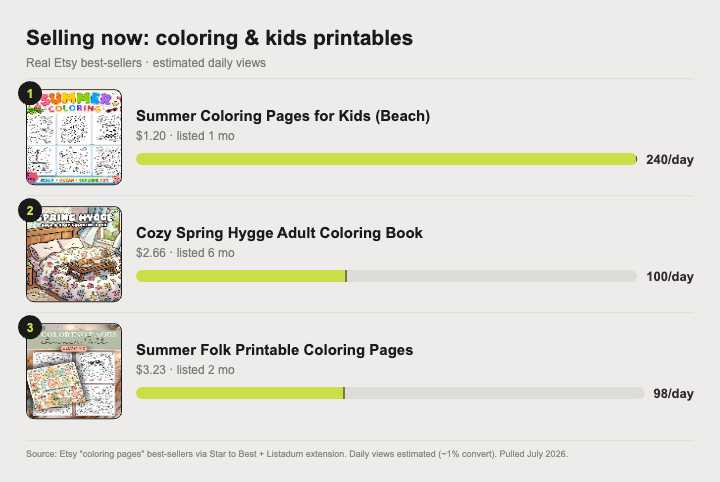
Education, kids, and coloring
Printables for learning and play hit three buyer groups at once: teachers (lesson plans, classroom decor), parents (homeschool worksheets, road-trip activity packs), and hobbyists (adult coloring pages).
The demand is steady rather than explosive, and specificity is everything:
- Age and theme specific. “Quiet-time busy book for 3-year-olds,” not “kids printables.”
- Coloring for a clear audience. Adult coloring for stress relief, or a themed kids’ book, beats generic coloring pages.
- Teacher resources by grade and subject. The buyer searches exactly that way.
Prices are modest ($3 to $5), so like clip art, this is a volume and bundle play more than a high-ticket one.
Creator tools and AI-assisted products
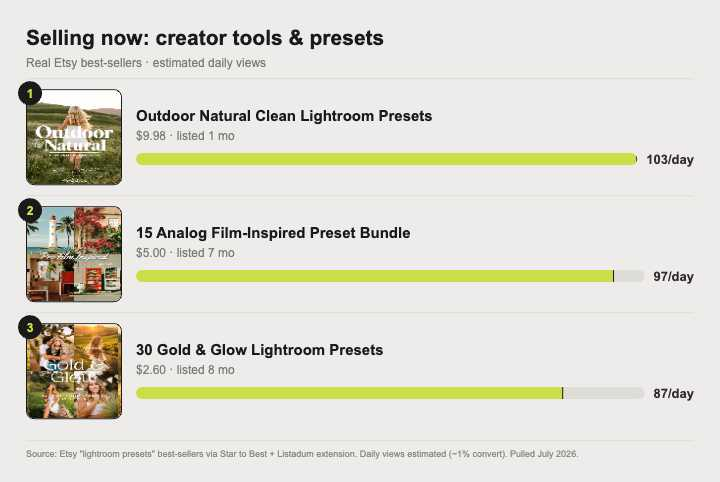
The “tools for other creators” corner is small files with high repeat purchase: Lightroom presets (around $6, and a notably winnable high-demand term), handwritten fonts, and design assets.
AI-assisted products belong here too, and they come with a rule you cannot skip, so read the next section before you build one. In short: AI-assisted is allowed and disclosed. AI prompt bundles are not. A guide to AI digital products is coming in this cluster.
The 2026 rules that quietly kill “easy” ideas
Here is where most “digital product ideas” lists will get you in trouble, because they were written before Etsy tightened its rules, and they still recommend the two fastest ways to lose a shop.
Etsy’s Creativity Standards require digital items to be “original content created by the seller.” Two popular “ideas” fail that test outright:
- Reselling PLR or mega bundles. Those “10 million digital products” resell dumps and “a bundle, collection, scan, or PDF of someone else’s work” are named as not allowed. They get views and then get taken down, with the refunds and account strikes to match. When we pulled the coloring-page bestsellers for this guide, the number-one result was literally a “10,000,000+ Coloring Pages Bundle PLR MRR” listing. That is the trap, not the model to copy.
- AI prompt bundles. Etsy now specifically lists “AI prompt bundles” as not qualifying. If a list is telling you to sell prompt packs in 2026, it is out of date.
What is allowed: products you made, including AI-assisted work built from your own original prompts, as long as you disclose the AI use in the listing. We cover exactly how in should you disclose mockups and AI images in your Etsy listings.
The short version: build something you own. It is the only foundation that lasts.
Free Etsy SEO Guide. Whatever you pick, it lives or dies on search. Get titles, tags, descriptions, and photos in one free guide you can work through listing by listing.
Match the price to the play
One more lens before you commit. Digital products sit on a wide price ladder, and where your idea lands tells you how the shop has to work.
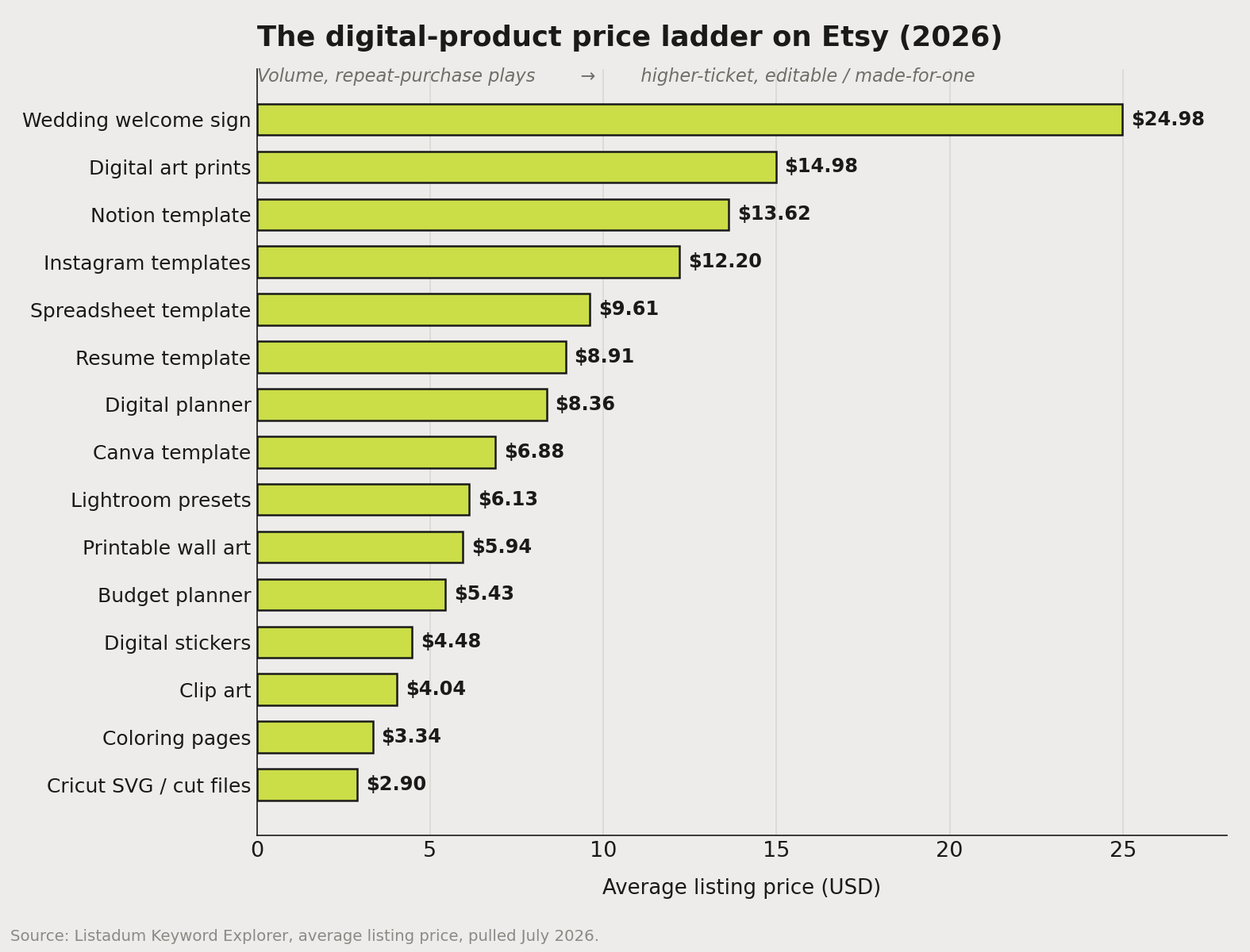
- Low-ticket, high-volume (SVGs, clip art, coloring, stickers, $3 to $5): you need many listings and repeat buyers. Bundles are how you lift the order value.
- Mid-ticket (planners, presets, Canva templates, $6 to $9): the workhorse zone. Specific and editable wins.
- Higher-ticket, made-for-one (spreadsheets, Notion, Instagram suites, editable wedding signs, $10 to $25): fewer sales needed, and editability or personalization justifies the price.
None is better than the others. They are different businesses. Pick the one that fits how you want to work.
How to pick and validate your product
Do not let anyone talk you out of a niche by calling it “too saturated” without checking the data first. Crowded and unbeatable are not the same thing, and I watch sellers talk themselves out of good ideas all the time.
Run the same quick test on any product you are weighing:
- Is there real search demand?
- Is the competition beatable, or is every top listing a huge shop with thousands of reviews?
- Can you make something genuinely different, and profitable, in it?
Use data, not instinct. A keyword tool that scores demand against competition turns “I think this could work” into a decision. Listadum’s Keyword Explorer shows you exactly that for any term, so you build around searches you can actually rank for. The demand-first mindset is the whole game.
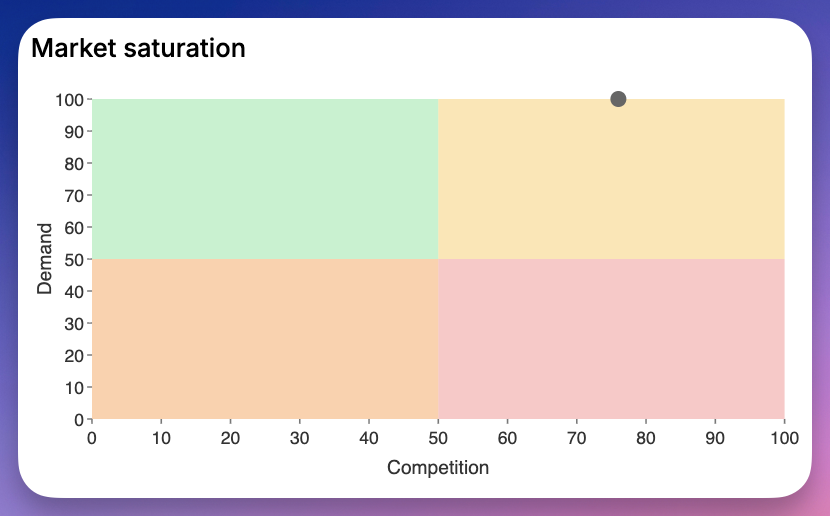
The best product for you sits where genuine demand, beatable competition, and your own ability overlap. A category you love with no demand is a hobby. A category with demand you cannot break into is a grind. Aim for the middle.
Worked example: from a generic pick to a winnable one
Say you land on “Instagram templates.” Good instinct, real demand, but the plain term is a wall of lookalikes and you would be competing with established design shops.
Watch what one move does. Instead of “Instagram templates,” you build Instagram carousel templates for real estate agents: editable in Canva, with listing-tour layouts, “just sold” posts, and open-house announcements.
Now look at what changed:
- You compete with almost no one. You went from the whole design market to one industry that searches for exactly this.
- You can charge more. Realtors buy business tools, not $4 crafts. A niche, editable suite holds a $15 to $25 price.
- You actually understand the buyer, so the product is better and the mockups speak their language.
Same skill, same afternoon of design work. The difference between invisible and winnable was the specificity, not the effort. That move works for almost every product on this page.
Where to go from here
If you take one thing from this guide, make it this: what to sell and what you can win are two different questions, and the second is the one that pays. Pick a category you actually like from the menu above, because you will make better products for a buyer you understand. Then niche down until the search feels almost too specific, and check the demand before you commit a weekend to it.
You do not need forty listings on day one. You need one specific, genuinely useful product aimed at a buyer who is searching for exactly that. Get that first one found, learn what the data tells you, and build the next from there. That is how every digital shop I have watched grow actually got going, one winnable listing at a time.
You have got this. Now go pick your one.
Frequently asked questions
What digital products sell best on Etsy?
The strongest categories in 2026 are planners (digital, GoodNotes, budget, meal), editable templates (Canva, resume, spreadsheet, Notion), printable wall art, SVG and clip art, education printables, and creator tools like Lightroom presets. Within any of them, the specific, well-targeted version outsells the generic one.
What is the most profitable digital product to sell on Etsy?
Profit comes from margin times traffic. All digital products share near-100% margin per sale, so the “most profitable” is the one you can actually get found for. Higher-ticket editable products (Notion templates, spreadsheets, Instagram suites, editable wedding signs at $10 to $25) need fewer sales, while low-ticket SVGs and printables rely on volume and repeat buyers.
Are digital products still worth selling on Etsy in 2026, or is it too saturated?
They are worth it if you niche down. The broad terms are crowded, but plenty of high-demand sub-niches (resume templates, Notion templates, Lightroom presets, ADHD planners) still have beatable competition. Saturated and unbeatable are not the same thing. Check demand against competition before you decide.
Can I sell AI-generated or PLR digital products on Etsy?
You can sell AI-assisted products that you made from your own original prompts, as long as you disclose the AI use in the listing. You cannot sell resold PLR or “mega bundle” files, or AI prompt bundles. Etsy’s Creativity Standards name both as not allowed, and listings that break the rule get removed.
How do I choose which digital product to make?
Pick where three things overlap: real search demand, beatable competition, and something you can make that is genuinely different. Use a keyword tool to check demand and competition rather than guessing, then get specific. The sub-niche, not the broad category, is what you are actually selling.
How much can you make selling digital products on Etsy?
It depends on traffic, not production, since you keep about 84 to 91% of each sale after Etsy’s fees. One strong listing can bring a few hundred dollars a month, but sellers earning real money run dozens of genuinely different listings, each catching its own searches. The full breakdown is in our how to sell digital products guide.
Pick your product, then see if you can win it
The hardest part of digital products is not making them. It is choosing one you can actually get found for.
Connect your Etsy shop to Listadum free and get demand-vs-competition data on your keywords, a completion score for every listing, and the exact fixes ranked by impact, so your best-margin products get seen.
Analyze your shop free →
Free plan · no credit card · connect your real Etsy shop in minutes
Neha Chandelier, Co-founder of Listadum, selling on Etsy since 2020. She writes about Etsy tips and tricks, how to sell on Etsy, and growing a handmade shop.
Related guides: The Complete Guide to Niche Etsy Strategies · How to Sell Digital Products on Etsy: 2026 Tips and Tricks · Selling on Etsy Without Inventory