
It is a Tuesday night, your sales have been down for three weeks straight, and you are staring at your Etsy dashboard trying to figure out what you did wrong. So you do the thing we all do: open a few listings, start swapping tags, and hope something sticks. I ran my shop exactly like that for the better part of two years, on vibes and a low-grade panic.
Here is what finally clicked for me. The two numbers you keep staring at, total sales and total views, cannot actually tell you what is wrong. Total sales is a scoreboard. It tells you you are losing, not why. And total views is almost a trap, because a shop can pull in plenty of views and still barely sell, and the fix for that is the opposite of adding more keywords.
A shop audit is just the habit of looking at the few numbers that do explain what is happening, then fixing the one or two that are actually holding you back. You do not have to be a numbers person, and it is not a spreadsheet marathon. Done right, it takes about 15 minutes a month.
This guide walks through the metrics that matter, how to tell an SEO problem from a listing problem, how to find the listings quietly dragging your shop down, and a monthly checklist you can run on repeat. By the end you will be able to open your stats and know exactly what to fix first.
TL;DR
- Total sales and total views are scoreboards, not diagnoses. Audit the metrics that explain why: visits, conversion rate, favorites, traffic sources, and revenue per listing.
- Diagnose before you fix. No views is a visibility problem. Views but no sales is almost never SEO, it is the thumbnail, title, price, or photos.
- Find your bottom listings, not just your top ones. A few low performers can drag your whole shop’s ranking down. Fix or retire them.
- Run a listing-level health check on your weakest listings: thin titles, missing tags, too few images, no video, low ratings. A completion score does this in seconds.
- POD sellers should watch different numbers: profit per order, thumbnail click-through, and an engagement score, not gross revenue.
- Turn it into a 15-minute monthly routine so you make changes from data, not hunches. That one shift is what changed my shop.
In this guide
- What an Etsy shop audit actually is
- The metrics that actually matter (and the vanity ones to ignore)
- Before you fix SEO, check this first
- How to read a single listing: what your low performers are telling you
- The listing-level audit: if your shop feels messy, start here
- The 5 signs your shop needs a tune-up
- POD shops: the metrics that matter more for you
- Your monthly Etsy shop health checklist
- How to run this whole audit in 15 minutes
- FAQ
What an Etsy shop audit actually is
An audit is not “checking your stats.” Checking your stats is glancing at a number and having a feeling about it. An audit is a repeatable process: you look at the same handful of metrics every time, you compare them to last month and to each other, and you come out with a short list of specific actions.
The difference matters because Etsy gives you a lot of numbers, and most of them are noise for decision-making. Your job in an audit is to ignore the noise and read the two or three signals that tell you where the money is leaking.
There are really only three questions a good audit answers:
- Are enough people finding my shop? (visibility)
- Are the people who find it clicking and buying? (conversion)
- Which specific listings are pulling their weight, and which are dead weight?
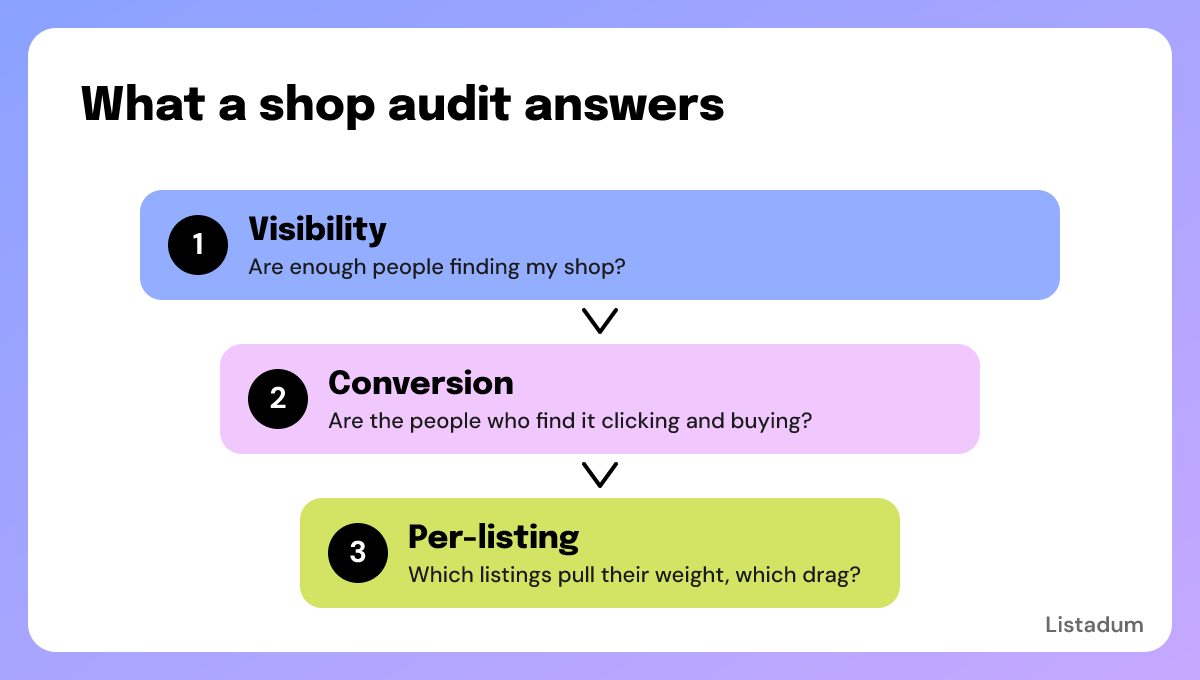
Everything below is in service of answering those three questions without guessing.
The metrics that actually matter (and the vanity ones to ignore)
Here are the numbers worth your attention, in the order they actually help you.
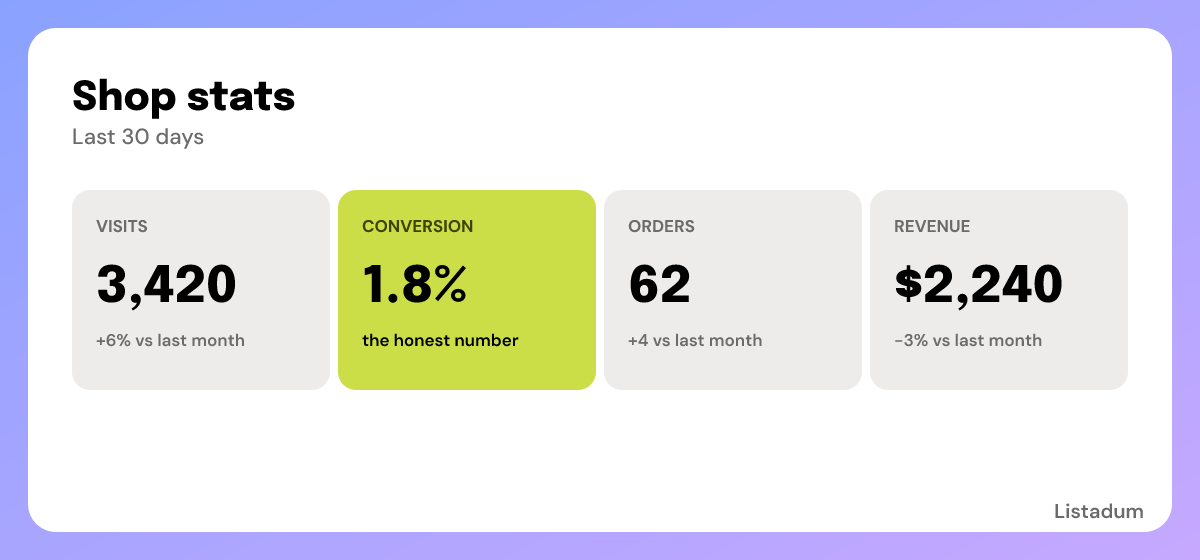
Visits, not just views. A view is any time your listing appears or is looked at. A visit is a real session on your shop. Visits are closer to intent. If visits are healthy but orders are not, your traffic is fine and your listings are the problem.
Conversion rate. This is orders divided by visits, and it is the single most honest number in your whole dashboard. Most Etsy shops convert somewhere between 1 and 3 percent of visits, though it varies a lot by category and price. You do not need a perfect benchmark. You need your own trend. If your conversion was 2.1 percent last month and 1.4 percent this month, something changed, and that is worth an hour of your time.
Favorites. Favorites are buyers raising their hand to say “I like this but I am not ready.” A listing with lots of favorites and few sales is telling you the product appeals but something at the finish line, price, shipping cost, reviews, is stopping the sale. That is a completely different fix from a listing nobody favorites at all.
Traffic sources. In Etsy Stats, look at where visits come from: Etsy search, Etsy app, direct, social, marketing. This one line reframes everything. If most of your traffic is Etsy search and it is falling, that is an SEO or freshness issue. If you get almost no search traffic at all, your listings are not being found for the terms you think they are.
Revenue per listing. Not total revenue, revenue broken down by listing. This is how you find the 20 percent of listings carrying your shop and the long tail doing nothing.
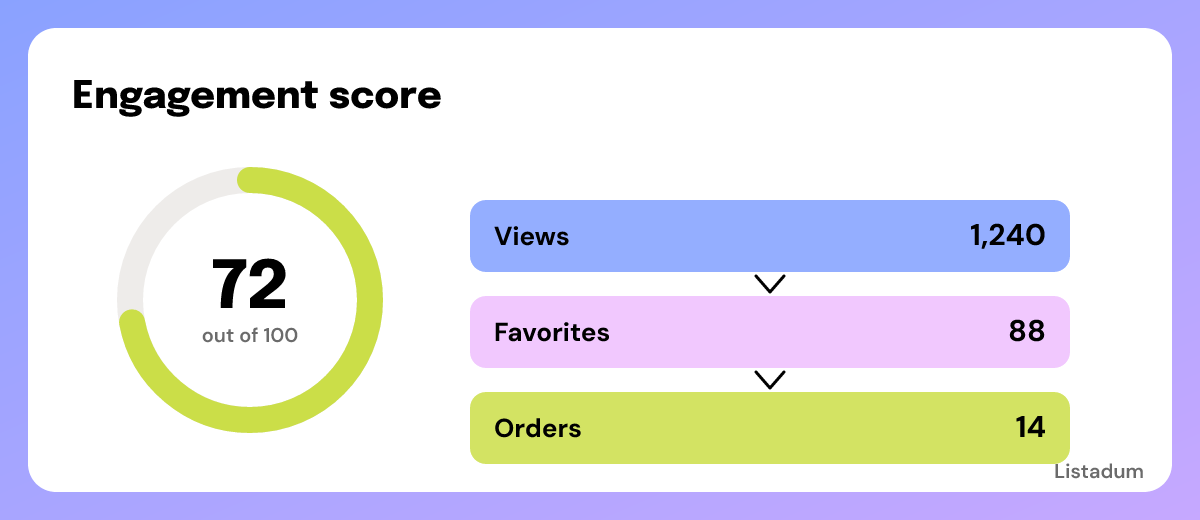
Engagement score. Etsy hands you these numbers scattered across different screens, which is part of why nobody checks them. Listadum rolls the whole buyer journey, view to favorite to order, into a single engagement score per listing, so you can see at a glance how well a listing turns attention into action. It is the fastest way to spot a listing that gets seen but stalls before the sale. Here is how the engagement score works.
Now the ones to stop staring at. Total views on its own tells you nothing about whether anyone bought. Total shop favorites feels nice and predicts almost nothing. And “impressions” in Etsy Ads without the click and order numbers next to them is just a big, flattering number.
The point of all of this is to stop guessing about what your buyers actually want. You do not have to imagine which products people love. Your favorites-to-sales pattern and your per-listing conversion already told you. An audit is just the habit of reading what the data is saying out loud.
Before you fix SEO, check this first
This is the mistake I see more than any other, and I made it for a year. Sales are down, so you assume it is SEO, and you spend a weekend rewriting titles and swapping tags. Sometimes that is right. Very often it is a waste of a weekend.
Before you touch a single tag, look at this one comparison: your views (or visits) against your conversion rate.
- Low views, low sales. This is a visibility problem. Your listings are not surfacing in search. Now SEO is the right lever: tags, titles, freshness, and the quality signals Etsy uses to decide who to show. (Our post on 5 common SEO mistakes Etsy sellers make is the right next read here.)
- Healthy views, low sales. This is a conversion problem, and SEO will not fix it. People are finding you and choosing not to click or not to buy. The lever is your thumbnail, your first photo, your price, your reviews, and your title’s readability, not your keywords.
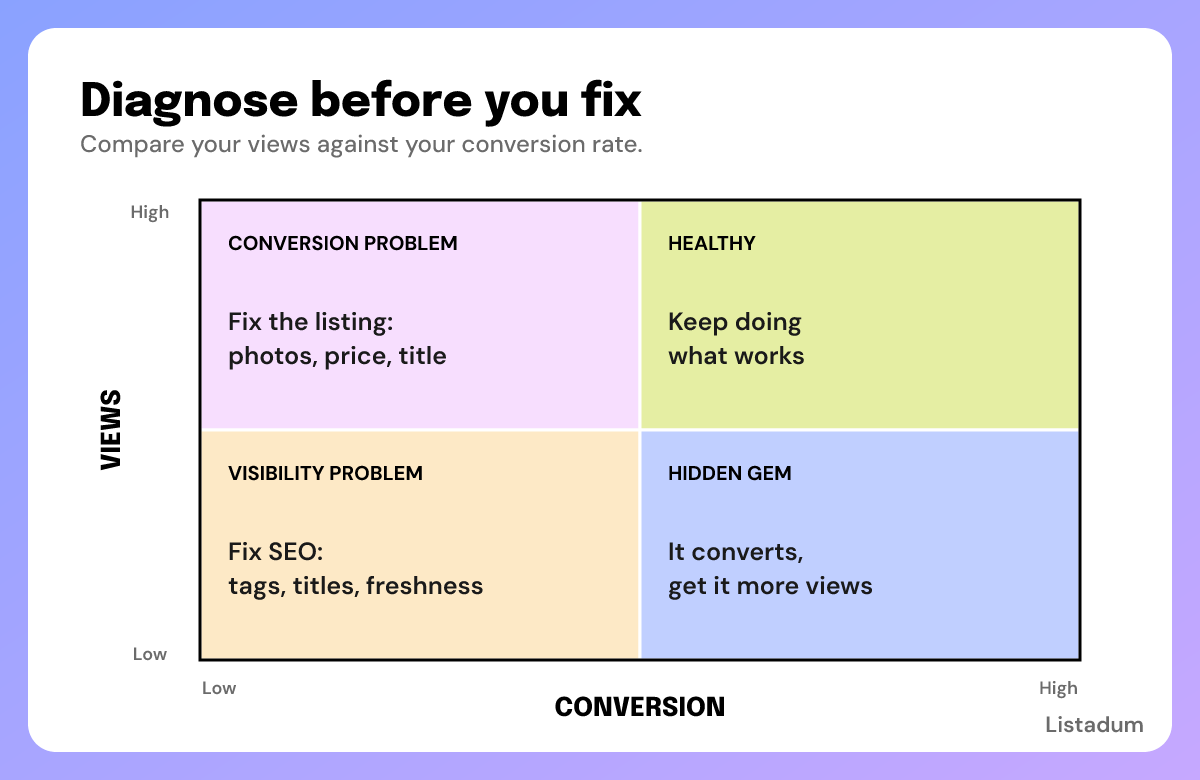
That second case is the one that trips everyone up. You can rank beautifully and still make no money if your listing does not convert the traffic it already gets.
It also explains a question I get constantly: “Why are my views flat when my SEO is fine?” Flat views are often not a keyword problem at all. Etsy watches how people engage with your listing. If shoppers see your thumbnail in search and scroll past it, that low click-through is itself a signal, and Etsy quietly shows the listing less. Add stale listings you never refresh and a slow season on top, and views flatten out while your tags are perfectly fine. The fix there is a better thumbnail and a refresh, not another round of keyword research.
So: diagnose first. Views versus conversion tells you whether you have a visibility problem or a conversion problem. Fix the right one.
How to read a single listing: what your low performers are telling you
Once you know whether the shop-level issue is visibility or conversion, zoom into individual listings. Every underperforming listing is trying to tell you something specific. Here is how to read the signal by the pattern:
- Lots of views, almost no clicks or favorites. The thumbnail is losing in search. Buyers see it next to competitors and scroll past. Fix the first image.
- Clicks and favorites, but no orders. The product appeals, the close does not. Look at price, shipping cost, review count, and whether the description answers the obvious buyer questions.
- Barely any views at all. The listing is not being found. Check that the title and tags actually match how buyers search, and that the listing is not buried by thin content Etsy deprioritizes.
- Sold well once, now flat. A fading listing. A refreshed tag set and a sharper title often revive it instead of letting it sink.
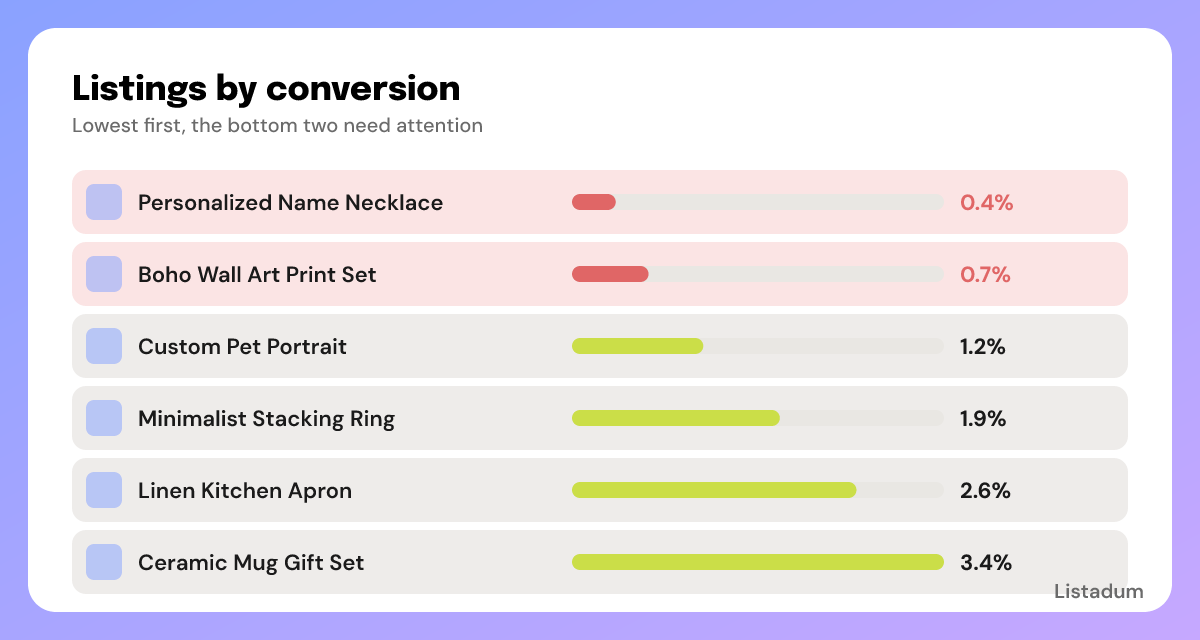
The other half of this is finding which listings are hurting you, not just diagnosing one at a time. A handful of weak listings, thin titles, one blurry photo, no tags filled, do more than underperform on their own. They can pull down how Etsy reads the quality of your whole shop.
To find them, sort your listings by conversion and by revenue, and look at the bottom. Can you name your worst-performing listing right now, off the top of your head? Most sellers cannot, and that is the real gap. You cannot fix what you have not identified. (Related: how to identify your top listings on Etsy, the same method works in reverse for your worst.)
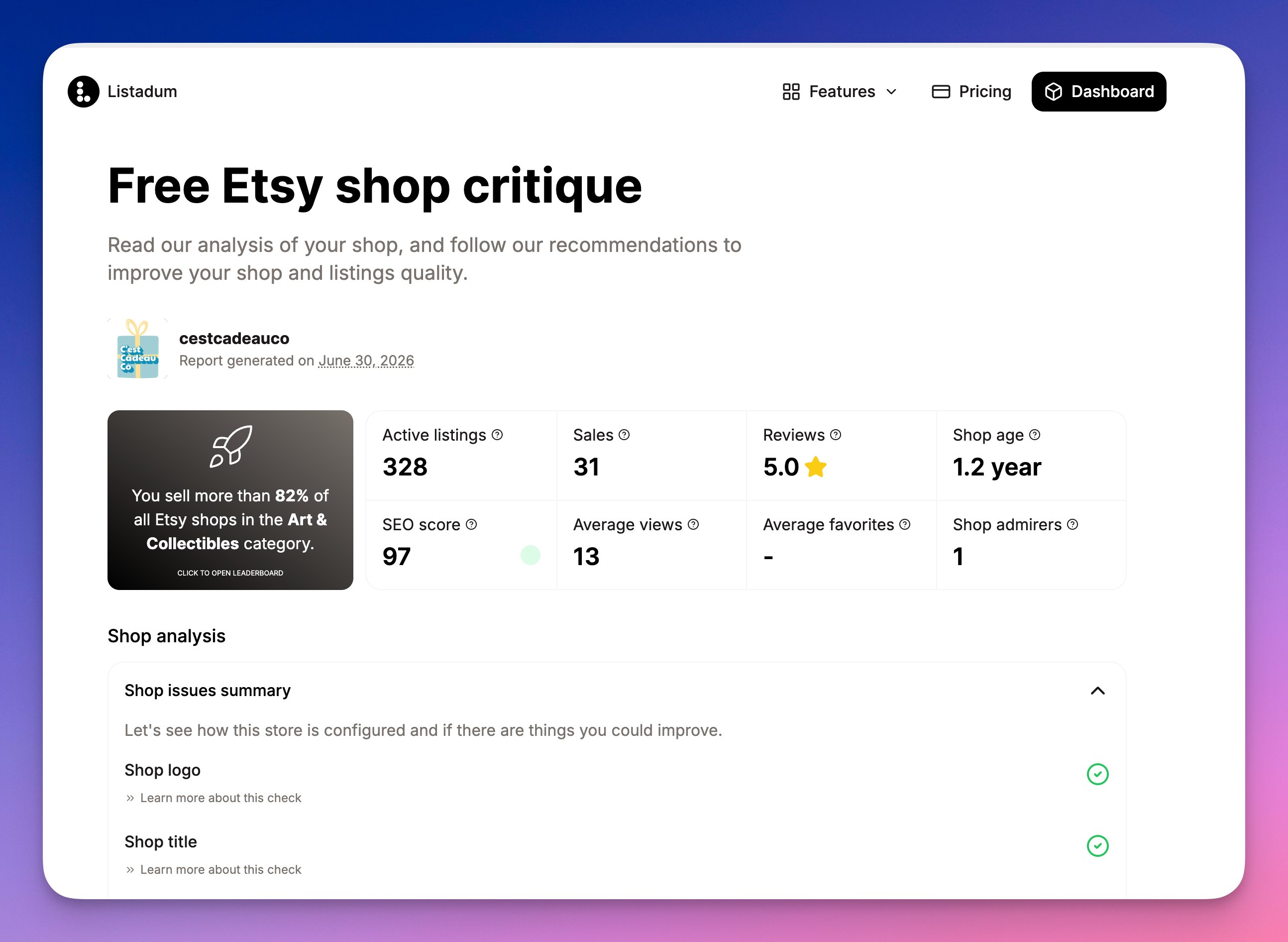
Want this whole audit done for you in 30 seconds? Run a free Shop Critique. It audits your entire shop and every listing in one pass: an overall shop score plus a score on each listing, with the exact issues flagged, missing tags, thin titles, too few images, low ratings. No signup required. It turns “is my shop off, and which listings are hurting me?” into a ranked to-do list you can work straight down.
The listing-level audit: if your shop feels messy, start here
If your shop feels like a pile of listings you have lost track of, do not try to fix everything. Run a health check on each listing and let the weakest ones surface. A listing is “healthy” when it gives Etsy and the buyer everything they need. In practice that means checking, for every listing:
- A full, readable title that leads with the terms buyers actually search
- All 13 tags used, no repeats, no single-word tags wasting a slot
- Enough photos, ideally close to 10, covering the hero shot, scale, detail, and context
- A video, which Etsy increasingly favors
- A description that answers buyer questions and is not two thin lines
- Attributes and category filled in completely
- A healthy rating and enough reviews to build trust
Going through that by hand across 100 listings is exactly the kind of task that makes you avoid your shop. This is where a completion score earns its keep. Listadum gives every listing a score from 0 to 100 based on checks like the ones above, and automatic issue detection tells you the specific problem on each one. You sort by lowest score, and your messiest listings rise to the top of the list, ready to fix. You can read more about how the score works on the Completion Scores page.
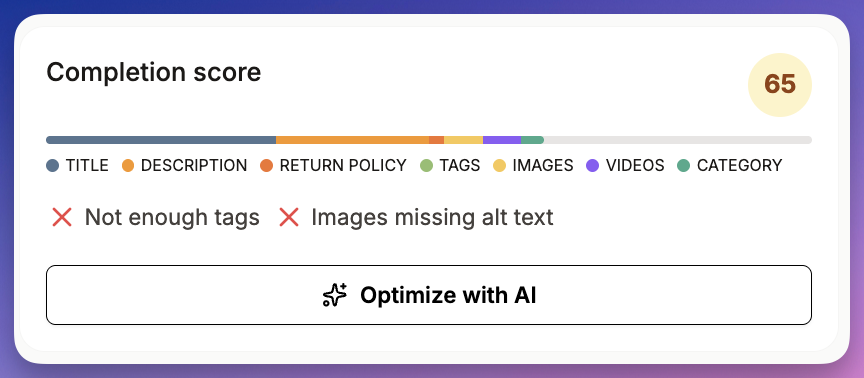
The point is not to chase a perfect 100 on everything. It is to stop the bleeding: find the listings dragging you down and bring them up to a solid baseline.
The 5 signs your shop needs a tune-up
You do not always need a full audit. Sometimes you just need to notice the warning lights. Here are five signs it is time:
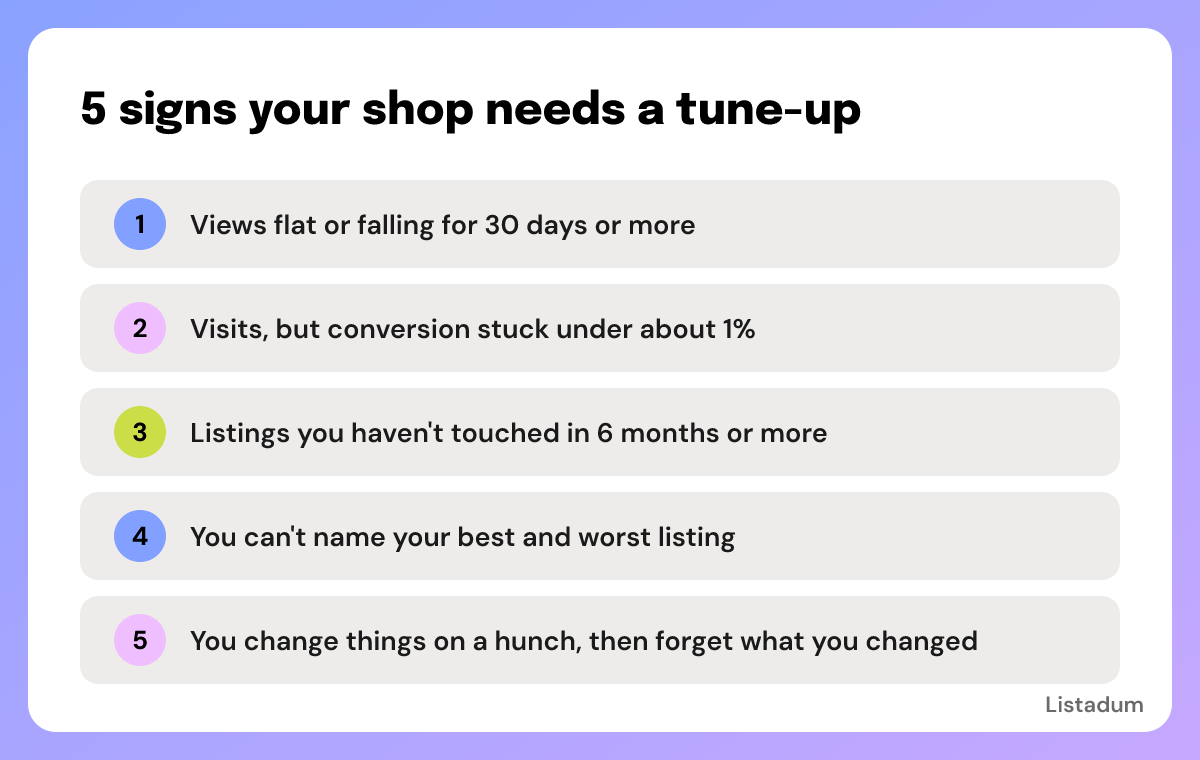
- Your views have been flat or falling for 30 days or more. One slow week is noise. A month is a trend.
- You get visits but your conversion is stuck under about 1 percent. Traffic is arriving and leaving. That is a listing and trust problem, not a traffic problem.
- You have listings you have not touched in six months or more. Etsy rewards freshness. Untouched listings quietly fade.
- You cannot name your best and worst listing. If you do not know which listings carry the shop and which drag it, you are flying blind.
- You make changes based on a hunch, then forget what you changed. No baseline, no comparison, no learning. This is the one that keeps shops stuck for years.
If two or more of these are true, block off 15 minutes and run the checklist further down.
POD shops: the metrics that matter more for you
If you sell print-on-demand, the shop-level logic above still applies, but two numbers matter more for you than for a handmade seller, because your margins are thinner and your mockups often look like everyone else’s.
Profit per order, not revenue. With POD, a $28 sale might net you $9 after the base cost, shipping, and Etsy fees. Gross revenue can climb while your actual take stays flat. Track profit per listing so you are optimizing the products that actually pay you. Listadum’s Profit Tracking pulls in your item costs so this is not a manual spreadsheet.
Thumbnail click-through. POD lives and dies on the mockup. When ten sellers list a similar design, the one whose thumbnail gets clicked wins, and Etsy shows it more. If your POD listings get impressions but few clicks, the mockup is the problem, full stop. Stop guessing which designs buyers respond to and watch what they actually click and buy.
Engagement score. For POD especially, the useful question is “how do buyers move through this listing,” view, favorite, order. Listadum’s engagement score captures exactly that, and it is the fastest way to fix a low-performing POD listing: the score tells you where buyers drop off so you know whether to change the mockup, the title, or the price. Here is how the engagement score works and what you can do to improve it.
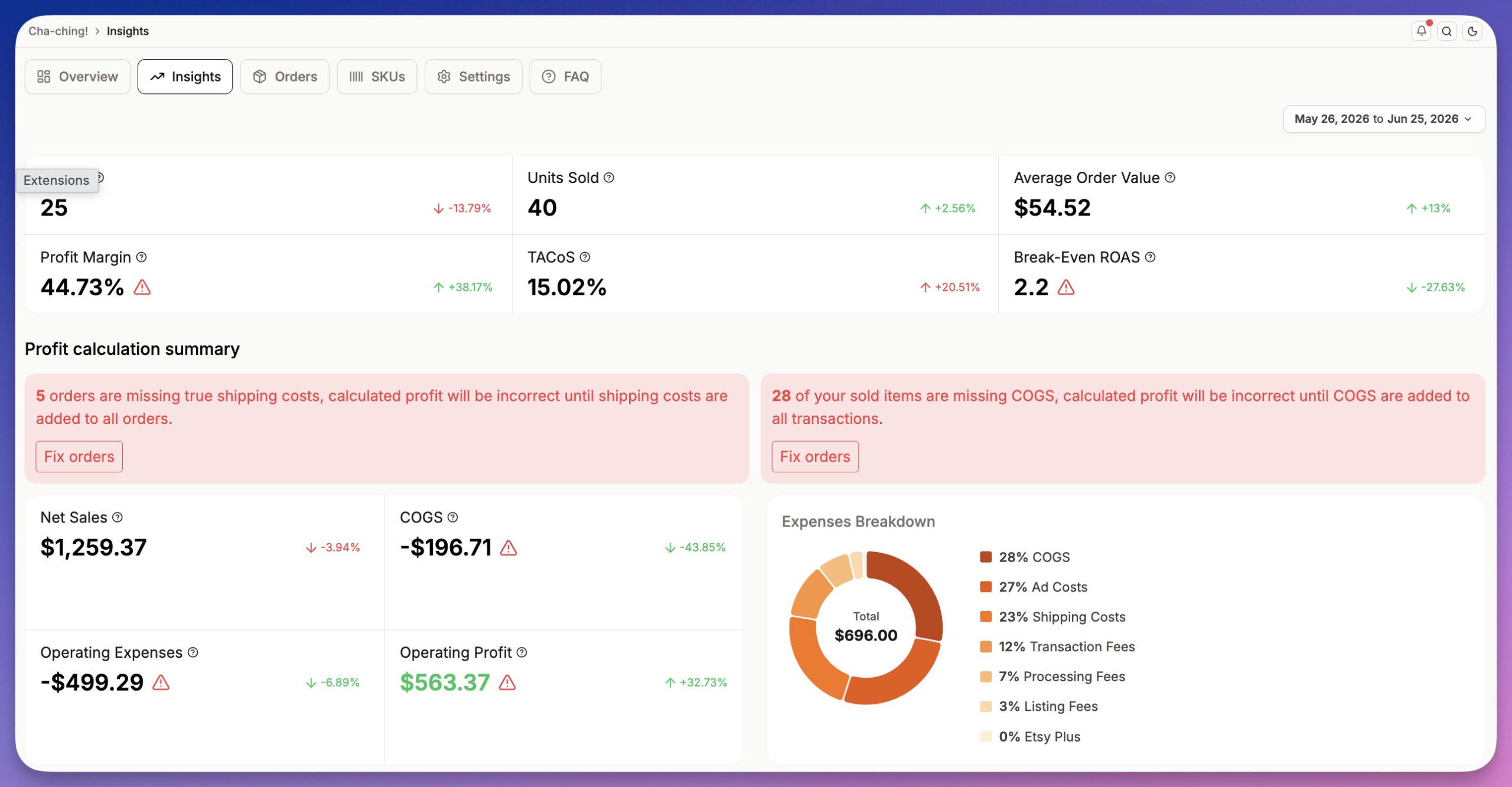
The theme is the same as the rest of this guide, just sharper for POD: with thin margins you cannot afford to guess, so you read what buyers click and buy, and you fix the listings the data flags.
Your monthly Etsy shop health checklist
Here is the actual routine. Once a month, ideally the same date each month so you are comparing like with like, run this. It takes about 15 minutes.
- Pull the last 30 days. Note visits, orders, conversion rate, and revenue.
- Compare to the month before. Up, down, or flat on each? You are looking for the number that moved most.
- Read your traffic sources. Is Etsy search steady? Did one source drop? That points you at visibility versus conversion.
- List your top 3 and bottom 3 listings by revenue and by conversion. Celebrate the top. The bottom is your to-do list.
- Run a listing health check. Sort by completion score or scan for issues. Pick the 3 worst and note what is wrong.
- Refresh 2 to 3 stalled listings. New tags, a sharper title, a better first photo. Small, specific edits.
- Write down one experiment. One change, one listing or set, that you will check next month. This is how a hunch becomes a learning instead of a shrug.
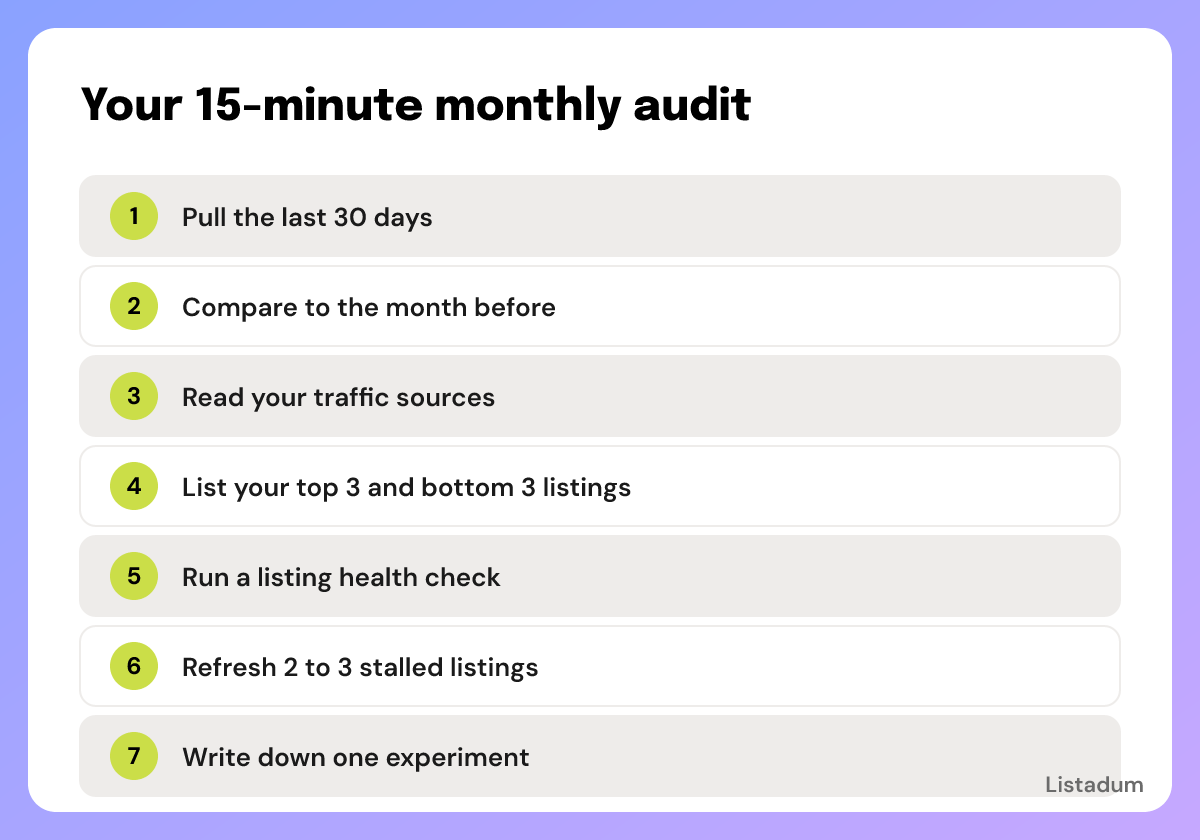
That is the whole thing. The magic is not any single step, it is doing it on repeat so you build a record. The month I stopped guessing and started running this, my shop changed, not because I worked harder, but because I finally knew which 3 things to fix instead of anxiously fiddling with all 100.
How to run this whole audit in 15 minutes
You can absolutely do everything above by hand in Etsy Stats and a notebook. The reason a tool helps is that it collapses the slow parts, scoring every listing, tracking conversion over time, breaking out profit per order, into a glance.
The fastest way to see all of it in one place is the free Shop Critique. This is the one report that does both halves of the audit together: it grades your whole shop and every individual listing in a single pass, then hands you a ranked list of exactly what to fix, from missing tags to thin titles to low ratings. You get the entire audit before you even make an account, and it takes about 30 seconds. If you read one thing from this guide, make it running your own critique.
For keeping the habit going month to month, Completion Scores rank your listings by health so the weak ones always surface, and Advanced Performance Monitoring tracks views, visits, and conversion over time so you see trends, not just today’s number.
Whether you use a tool or a notebook, the habit is the point. Look at the few numbers that matter, on a schedule, and act on the one that is holding you back.
FAQ
What is an Etsy shop audit?
An Etsy shop audit is a repeatable review of the metrics that actually predict sales, visits, conversion rate, favorites, traffic sources, and per-listing performance, followed by a short list of specific fixes. It answers three questions: are people finding your shop, are they buying, and which listings are helping versus hurting.
How often should I audit my Etsy shop?
Once a month is plenty for most shops, ideally on the same date each month so you are comparing equal periods. Do a deeper audit quarterly, and a quick check any time sales move sharply.
What is a good conversion rate on Etsy?
Most Etsy shops convert roughly 1 to 3 percent of visits, but it varies widely by category and price point. Rather than chase a universal benchmark, track your own conversion trend month over month. A drop in your own rate is the signal worth acting on.
My views dropped but my SEO hasn’t changed. Why?
Flat or falling views are often not a keyword problem. If shoppers scroll past your thumbnail in search, that low click-through tells Etsy to show the listing less. Stale listings and slow seasons add to it. A stronger first image and a refresh usually help more than new tags.
How do I find which listings are hurting my shop?
Sort your listings by conversion rate and by revenue and look at the bottom, not just the top. Then run a listing health check for thin titles, missing tags, too few images, or low ratings. A completion score does this automatically and ranks the weakest listings for you.
Do print-on-demand shops need a different audit?
The process is the same, but POD sellers should weight profit per order, thumbnail click-through, and an engagement score more heavily, because margins are thin and mockups are competitive. Watch what buyers click and buy, and fix the listings the data flags.
Your stats already contain the answer to why your shop is or isn’t selling. An audit is just the habit of reading them on purpose. Start with one 15-minute pass this week: pull your last 30 days, find your bottom three listings, and fix one thing.
Want the audit done for you? Connect your Etsy shop to Listadum free and get a completion score on every listing plus your real conversion trends, no trial clock, no credit card. It is the fastest way to turn “I think my shop is off” into “here are the three listings to fix first.”