


I was scrolling Etsy a while back, half shopping and half snooping on other shops, when I noticed a small tag on a listing: “Made by seller.” Then another one said “Designed by seller.” I stopped and stared for a second.
My first thought wasn’t about policy at all. It was, “Wait, what does this label say about my shop, and is it going to change how buyers see me?” Then the second thought hit: does this affect my sales?
So I did what any slightly anxious seller does. I dug in. It turns out those little tags come from Etsy’s Creativity Standards, the rules that decide what counts as allowed on the platform and how your item gets labeled. Etsy rewrote them in June 2025, and a lot of sellers got caught off guard.
Here is the good news before we start: if you actually make, design, curate, or genuinely source your products, you are almost certainly fine. This guide is the plain-English map I wish I’d had that day. What the tags mean, which bucket your product falls into, what changed, and a quick way to check that your shop is in the clear.
What are the “Made by / Designed by / Handpicked by / Sourced by” tags?
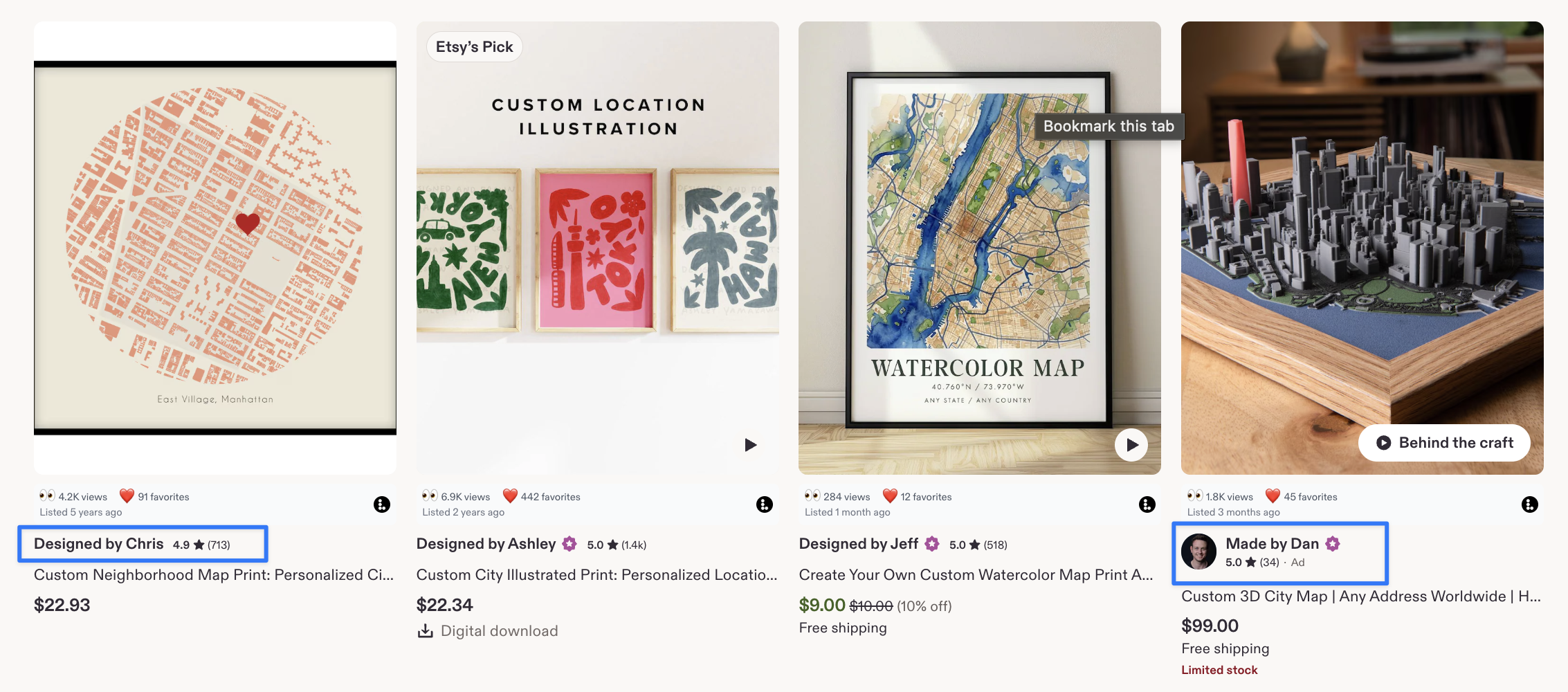 Etsy now shows an item-detail tag on listings so buyers can see how an item came to exist.
Those tags are the visible face of the Creativity Standards. Etsy now shows an item-detail tag on listings so a buyer can see, at a glance, how the item came to exist. There are four of them: Made by, Designed by, Handpicked by, and Sourced by a seller. Vintage listings also show an estimated year of origin.
The point, from Etsy’s side, is trust. Etsy has always sold itself as a place for real people making real things, and the tags make that promise visible on every listing. For you, the tag is just a label that reflects the category your item already belongs to. You don’t pick it to game anything. It follows from what your product actually is.
Do these tags help or hurt your sales?
This was my real worry, so let me answer it first and honestly.
For genuine makers and designers, the tags help more than they hurt. A “Made by seller” tag is a quiet trust signal. It tells a buyer who came to Etsy specifically to avoid mass-produced stuff that they found the real thing. That is the whole reason many shoppers choose Etsy over a giant marketplace.
The tags only become a problem in two cases. First, if your listing is mislabeled, because you put it in the wrong category or your shop setup doesn’t match what you actually do. Second, if a buyer clicks in and the listing feels thin or generic, so the label and the reality don’t line up.
In other words, the tag itself is not a sales risk. A listing that doesn’t back up its label is. So the move is not to fear the tags, it is to make sure each listing earns the one it carries.
The four categories, and which one your product is in
Etsy sorts every listing by your creative role, not by the type of object. Here is the simple version of each bucket, in my own words.
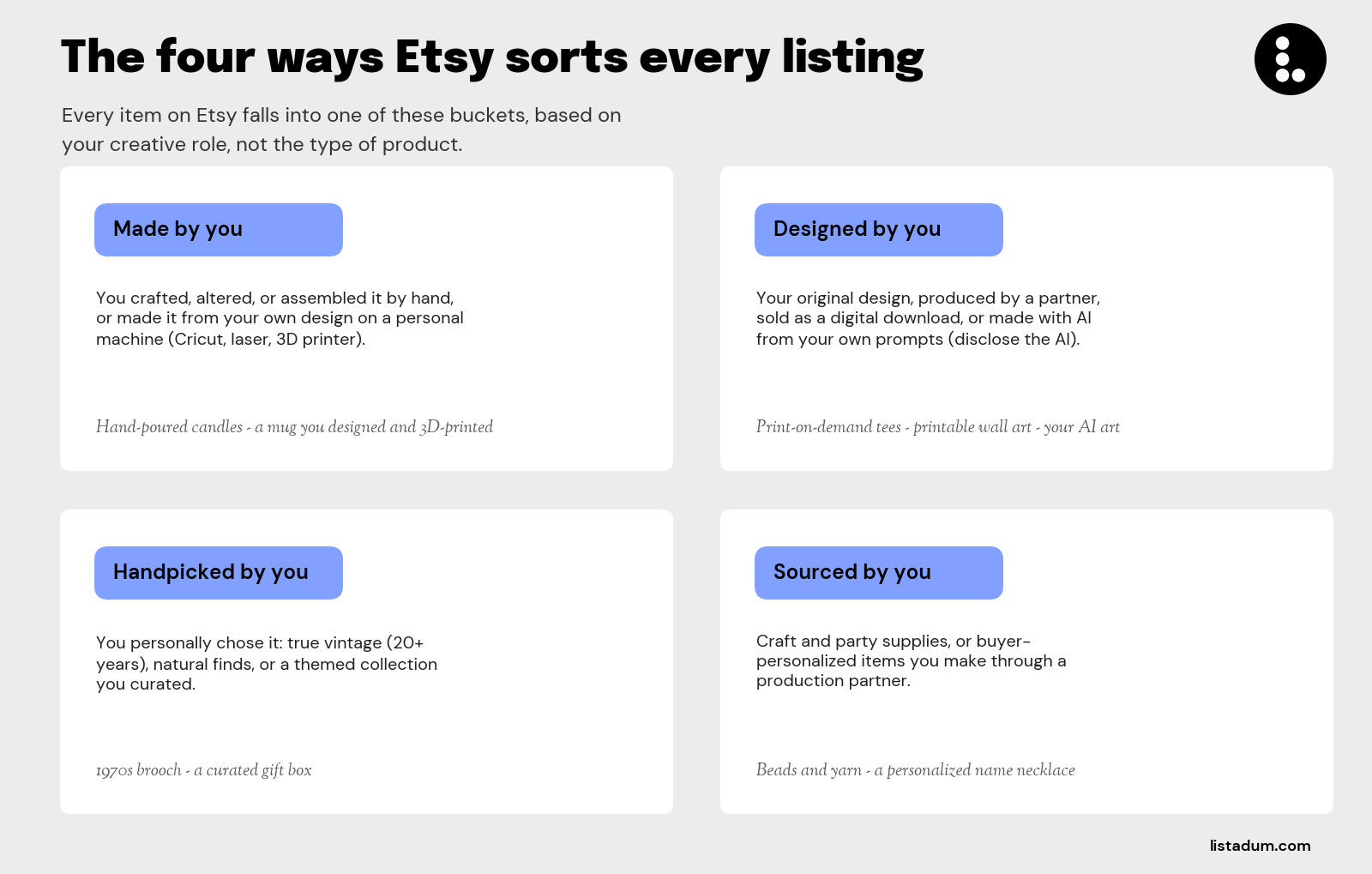
Made by you. You crafted, altered, or assembled the item by hand, or you made it from your own design using a personal machine like a Cricut, laser cutter, or 3D printer. The key is that the design starts with you. Hand-poured candles and a mug you designed and printed both fit here.
Designed by you. You created the original design, and it gets produced by a third party, sold as a digital download, or generated with AI from your own prompts. Print-on-demand shirts, printable wall art, and your own AI-assisted art live here. If AI was involved, you have to disclose it (more on that below).
Handpicked by you. You personally chose the item. That means true vintage (roughly 20 years old or more), natural finds, or a themed collection you curated yourself. A 1970s brooch or a gift box you assembled counts.
Sourced by you. Craft and party supplies, plus buyer-personalized goods you make through a production partner. Beads and yarn belong here, and so does a personalized name necklace made with a partner.
If you sell across more than one of these, that’s normal. A shop can hold different categories. Each individual listing just needs to sit in the right one. If you want a deeper walkthrough of tightening up each listing, our listing optimization guide covers the details.
The rule that trips people up: a license is not your design
Here is the mistake I see most, and it’s an easy one to make. Etsy’s standards are about who created the design, not about what you have a license to sell.
Buying clip art, a PLR (private label rights) template, a commercial-use SVG, or someone else’s digital file does not make that design yours, even when the license clearly says you can sell it. A commercial license gives you selling rights. It does not make you the creator.
If you did not design it, it is not “Made by” or “Designed by” you, no matter what the license allows.
Etsy is clear that reselling someone else’s files, scans, or bundled collections does not count as your original work. It’s the same logic as the Cricut and 3D-printing rule: the design has to start with you.
So what can you do with licensed art? Treat it as raw material. Combine and change it enough that the final design is genuinely your own creative work, or design from scratch. If you are reselling a template or clip-art pack close to as-is, that is exactly the kind of listing the Creativity Standards now remove.
What changed in June 2025 (and who got caught)
Here is the part that surprised people. The June 2025 update was less of a clarification and more of a tightening, and it went live largely without warning. If your listings were removed around then, this is probably why.
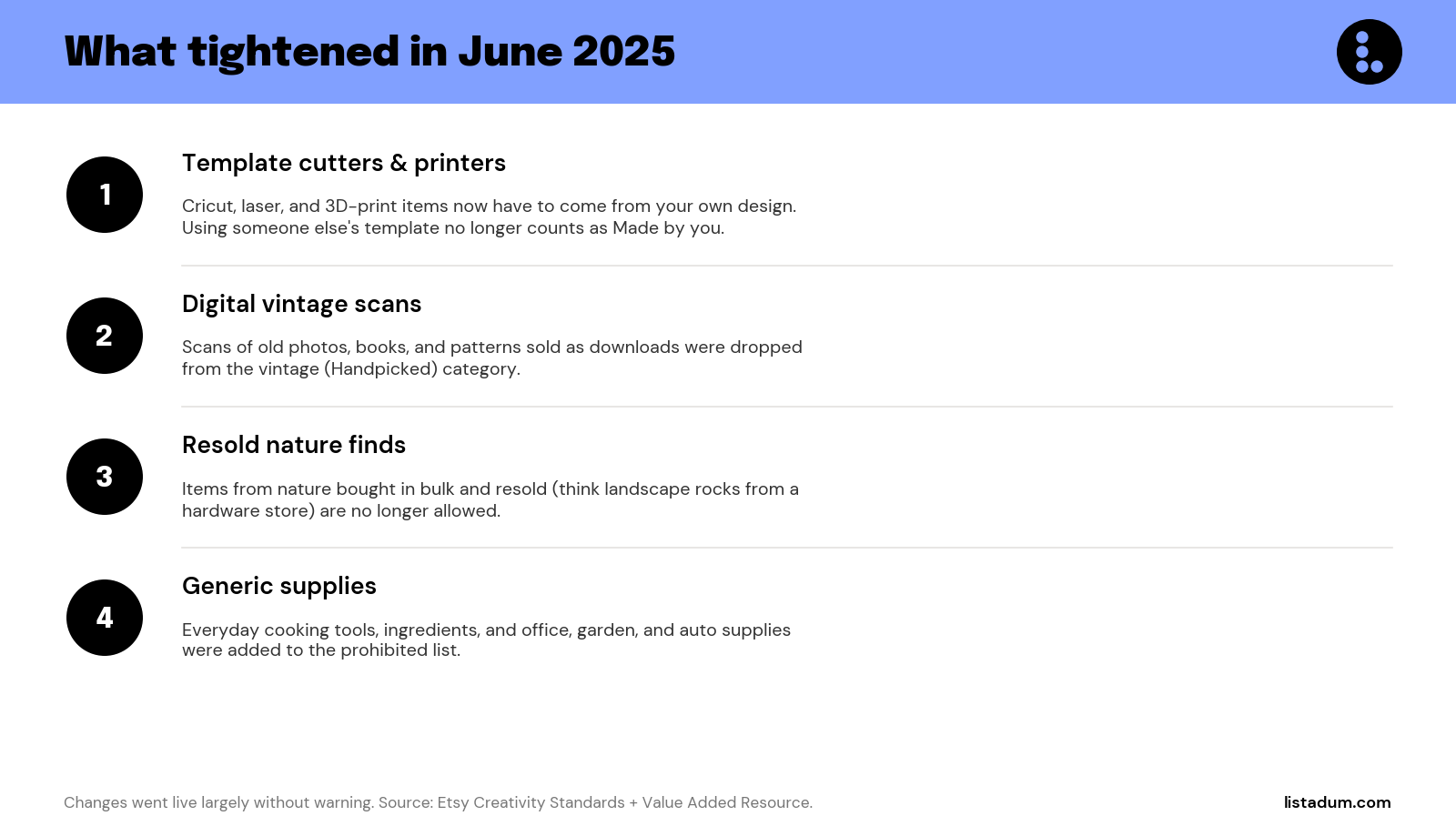
Four groups felt it most:
- Template cutters and printers. If you use a Cricut, laser, or 3D printer, your items now need to come from your own design. Cutting or printing someone else’s template no longer counts as Made by you.
- Digital vintage scans. Scans of old photos, books, and patterns sold as downloads were dropped from the vintage (Handpicked) category.
- Resold nature finds. Items from nature that you buy in bulk and resell, like landscape rocks from a hardware store, are no longer allowed.
- Generic supplies. Everyday cooking tools, ingredients, and office, garden, and auto supplies were added to the prohibited list. On the party side, the allowed examples were narrowed to things like festive table decorations, balloons and streamers, and gift wrap.
If none of those describe you, you can breathe. If one of them does, the fix is usually about showing your own design work or curation more clearly, not abandoning your product.
AI art, prints, and digital downloads
AI is the piece that changes the most, so it’s worth getting right.
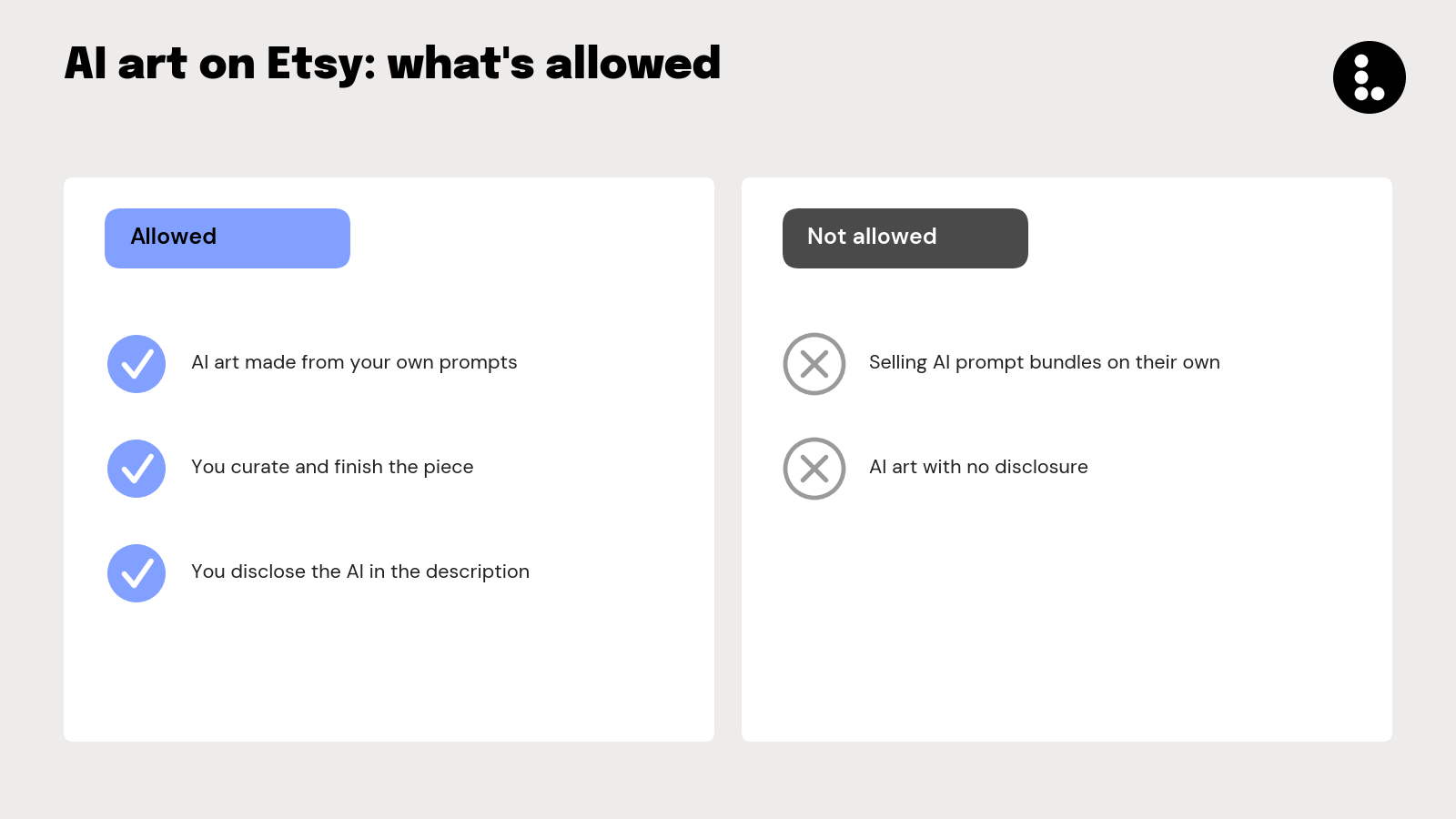
Etsy allows AI-generated art as long as you supply the original prompts and shape the result into a finished piece. The catch is that you have to disclose the AI involvement in your listing description. That disclosure is not optional.
There is one clear line: you cannot sell AI prompt bundles on their own. Etsy’s view is that a prompt is only part of the creative work, so a bundle of prompts by itself doesn’t qualify as your design.
Disclosure is becoming its own topic as laws catch up, and it’s easy to get wrong. If you sell AI art, prints, or downloads, it’s worth reading our take on whether to disclose mockups and AI images so your descriptions stay on the right side of both Etsy and the newer rules.
Using production partners the right way
Plenty of successful shops use outside manufacturers, and Etsy has allowed this since 2016. You are allowed to scale. You just have to stay the creative force behind the product, and you have to disclose your production partners on your shop page.
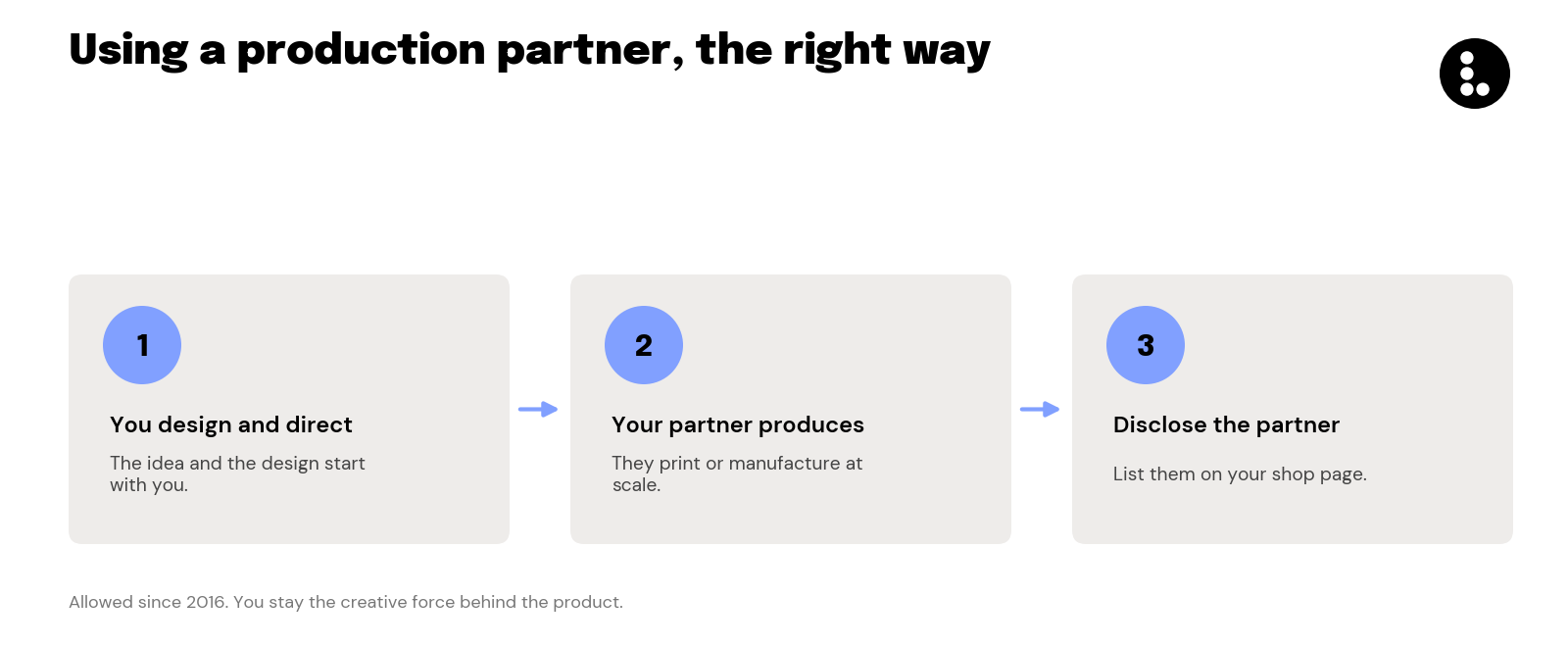
That disclosure trips up a lot of print-on-demand and personalized-goods sellers, because it’s easy to set up the shop and forget the partner step. If you run POD, our guide to Etsy’s rules for print-on-demand sellers walks through exactly where that disclosure goes.
The mental model is simple. The partner prints or produces. You design and direct. As long as that’s true and you’ve said who your partner is, you’re compliant.
Your photos have to match
The Creativity Standards lean on Etsy’s image rules, and this is where a surprising number of listings slip.
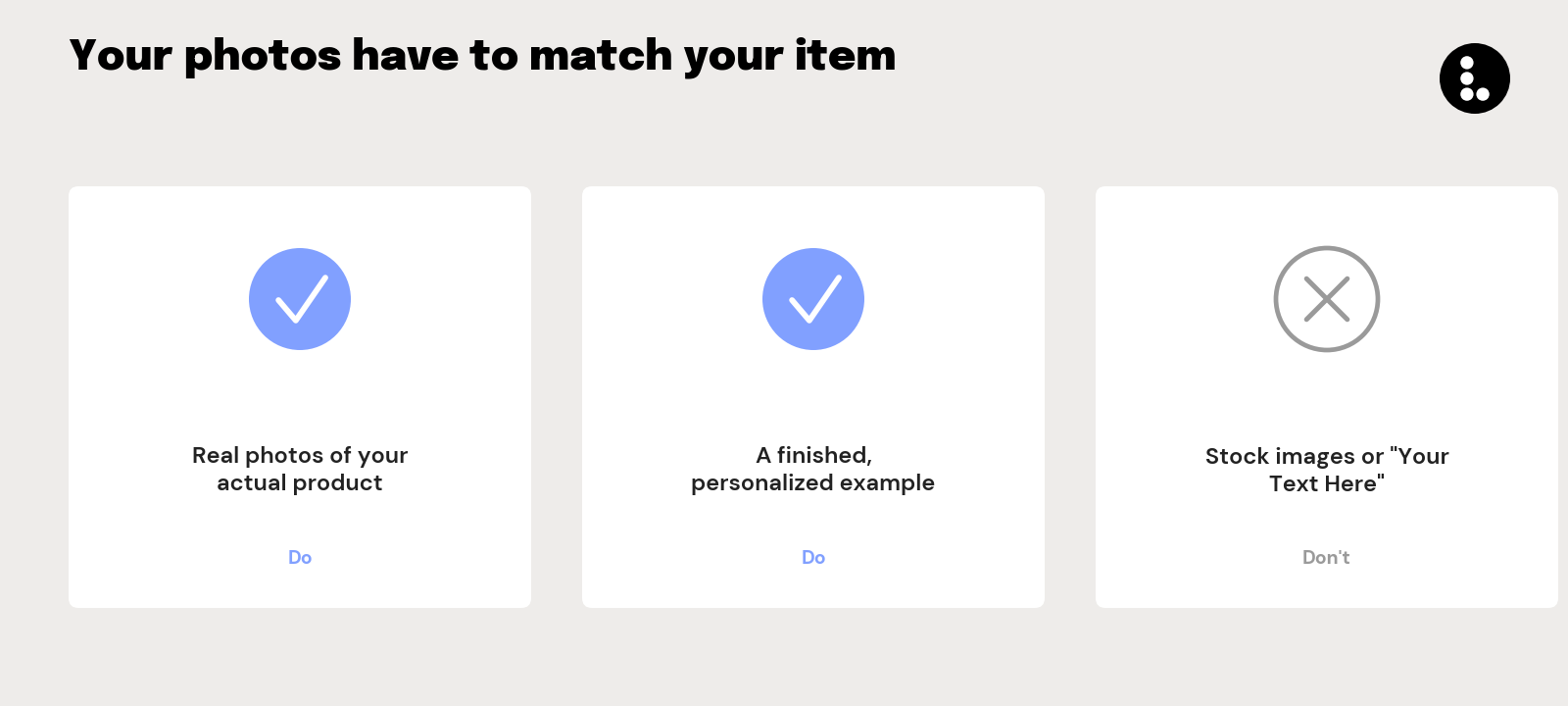
The short version: use real, original photos of your actual product. Stock images are not allowed, with a narrow exception for production-partner mockups. And if your item is personalized, your photos need to show a finished, customized example, not a placeholder that says “Your Text Here.”
This one is quietly important, because a listing that leans on generic or placeholder images is exactly the kind that makes its item-detail tag look unearned. If you want to level up here, these listing image types and our guide to listing personalized items both help.
A 5-minute check: is your shop in the clear?
You don’t need to panic-audit all night. Run through this quick list:
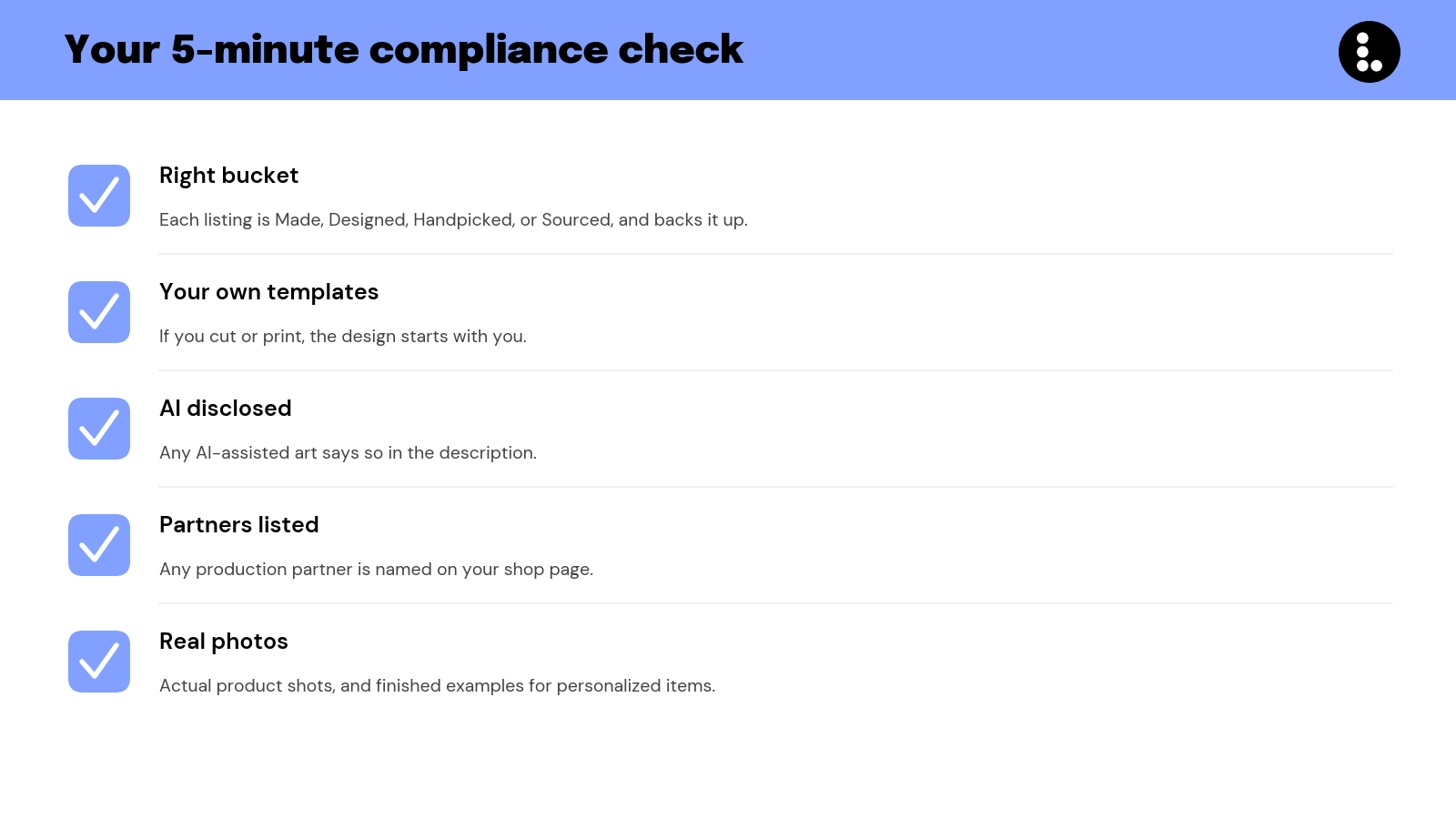
- Every listing sits in the right bucket. Made, Designed, Handpicked, or Sourced, and the listing backs it up.
- Templates are yours. If you cut or print, the designs originate with you, not someone else’s file.
- AI is disclosed. Any AI-assisted art says so in the description.
- Production partners are listed. If a partner produces for you, they’re named on your shop page.
- Photos are real. Actual product shots, and finished examples for personalized items.
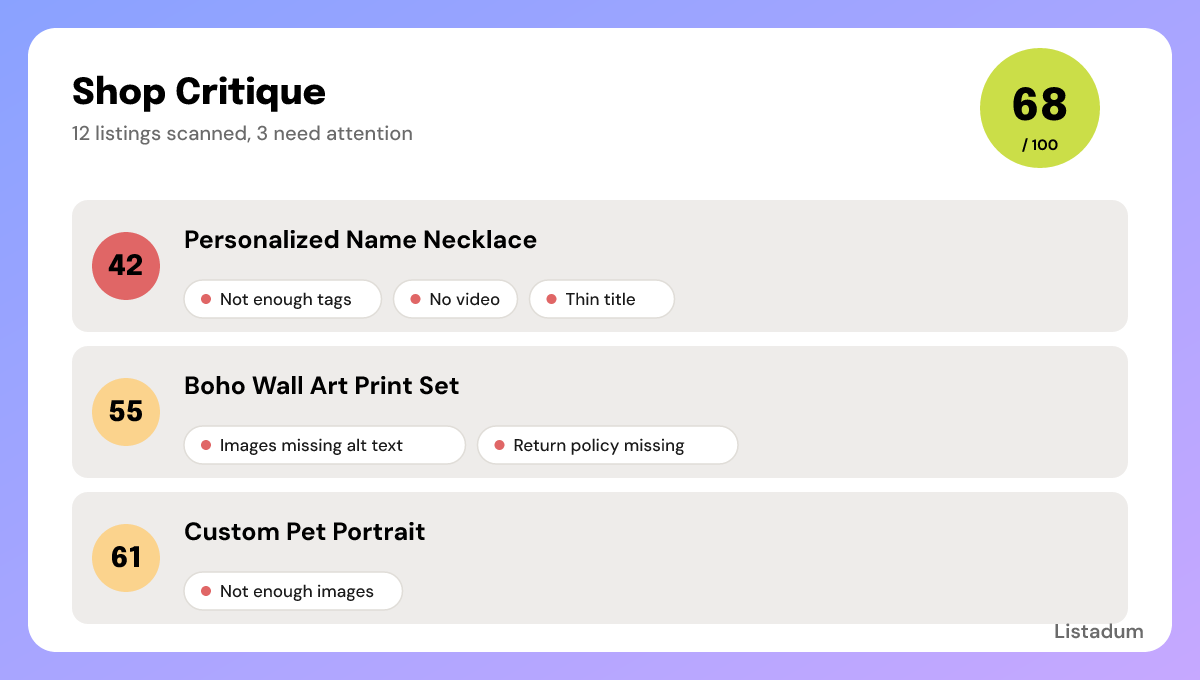
If you’d rather not eyeball every listing, this is where a tool helps. Listadum’s automatic issue detection flags the listing-level things this policy cares about, like thin or placeholder-style images and missing details, and gives each listing a completion score so you can see what to fix first.
Want a fast read on your whole shop? Run a free Shop Critique and see which listings look risky before Etsy does.
Closing
Here’s what I landed on after all that digging. The Creativity Standards are not out to get real sellers. They reward exactly the work you’re already doing, and the item-detail tags make that work visible to the buyers who came to Etsy for it.
For most of us, the whole thing comes down to two or three small checks: make sure each listing is in the right category, disclose AI and production partners, and use real photos. Do that, and the tags become a trust signal working in your favor instead of a mystery to worry about.
Not sure which bucket your listings fall into?
Connect your shop to Listadum free and get a clear, listing-by-listing read, so you can see which items need a category fix, an AI disclosure, or a production partner named.
Free plan · no credit card · connect your real Etsy shop in minutes
FAQ
Does AI art get you banned on Etsy? No. Etsy allows AI-generated art when you use your own original prompts and finish the piece yourself. You do have to disclose the AI involvement in your listing description. What you cannot do is sell AI prompt bundles on their own.
Do I have to disclose my production partner? Yes. If an outside manufacturer helps produce your original designs, Etsy requires you to list your production partners on your shop page. You stay the designer; the partner produces.
I used a template on my Cricut. Is my listing at risk? It can be. Since June 2025, items made with personal machines need to come from your own design. If you cut or print another person’s template and sell it as handmade, that no longer qualifies as Made by you. Using your own designs keeps you clear.
Can I sell clip art or PLR templates I bought with a commercial license? Not as-is. A commercial or PLR license gives you the right to sell, but Etsy’s standards are about who created the design. Reselling someone else’s clip art, template, or file does not qualify as Made or Designed by you. You can use licensed art as raw material if you transform it into your own original design.
Will a “Sourced by seller” tag hurt my sales? Not on its own. The tag simply reflects the category your item is in. Sales suffer only when a listing feels generic or is mislabeled, not because of the label itself. A strong, honest listing earns trust in any category.
What if my listing was already removed under the Creativity Standards? Removals spiked after the June 2025 update, often without much warning. Review which category your item truly fits, fix the gap (your own design, a disclosed partner, real photos, or an AI disclosure), and use Etsy’s appeal process if you believe the listing was compliant.
Neha Chandelier, Co-founder of Listadum, selling on Etsy since 2020. She writes about Etsy tips and tricks, how to sell on Etsy, and growing a handmade shop.