
A note from Cyril before you dive in. This post was written by a friend, Nick, who runs a personalized wedding accessories shop on Etsy and Amazon. We’re both part of a founders mastermind, which is how we got talking. I asked him to write this because “is it worth expanding from Etsy to Amazon?” is a question I hear often from Listadum sellers, and one I’m working through for my own new shop too.
Rather than speculate, I figured we’d hear from someone who’s actually done it. Take it away, Nick.
If you’re an Etsy seller doing well with your niche, the idea of expanding to Amazon probably feels equal parts exciting and overwhelming. I’ve been there. I sell personalized wedding accessories (bride hangers, ring boxes, that kind of thing), and a number of years ago I made the jump to Amazon. Within two years, my revenue had doubled.
Within two years, my revenue had doubled.
It wasn’t without its learning curve, but if you sell handmade or personalized products, expanding to Amazon is one of the best moves you can make. Here’s what you need to know before you start.
Why I Chose to Expand to Amazon
Two things made the decision easy for me. First, Amazon’s sheer volume of traffic dwarfs Etsy’s. More eyeballs on your products means more potential customers. Simple as that.
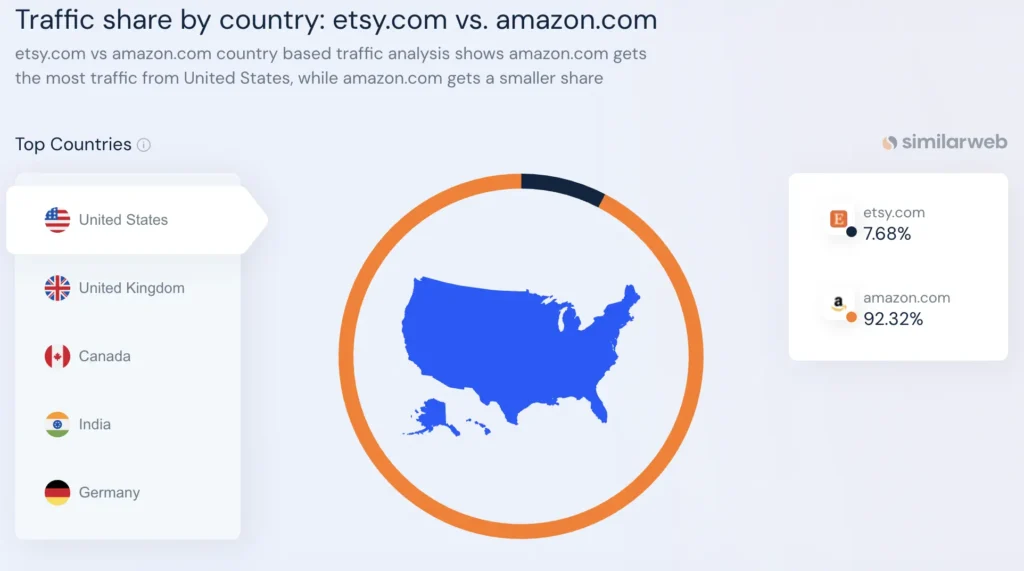
Second, I noticed there wasn’t a lot of competition for my products on Amazon at the time. On top of that, Amazon was just launching Amazon Handmade, a dedicated section for artisan sellers clearly designed to compete with Etsy. It felt like the right moment to get in early.
Getting Set Up: It’s More Complex Than Etsy
Setting up an Amazon store takes more effort than opening an Etsy shop. The platform has significantly more features and requirements, and the learning curve is real. Budget some time for it.
One thing that tripped me up early on: if you’re selling a product that doesn’t have an existing GTIN or UPC code (which many handmade or personalized items won’t), you’ll need to request a GTIN exemption before you can create any listings. The good news is that approval typically comes through quickly, usually within one to two days. Once you have it, you’re ready to start building your listings.
The Basics Still Apply
A lot of what makes a great Etsy listing also makes a great Amazon listing. High-quality product photography is still essential. You’ll want a variety of image types: lifestyle shots, close-ups, different angles, and images that show scale. Keywords still matter, so research how your customers are actually searching and use that language in your titles and descriptions.
If you’ve already put work into your Etsy listings, you’re not starting from scratch. Much of that knowledge transfers directly.
Personalization on Amazon Is Surprisingly Powerful
This is where Amazon actually has a real edge over Etsy for sellers like me. Amazon’s personalization features are robust:
- Text customization: You can set font options, colors, and character limits for customer-entered text.
- Drop-down menus: Multiple options per listing, such as choosing a wood type or finish.
- Image uploads: Customers can upload their own photos directly on the product page (Etsy just released this feature too!).
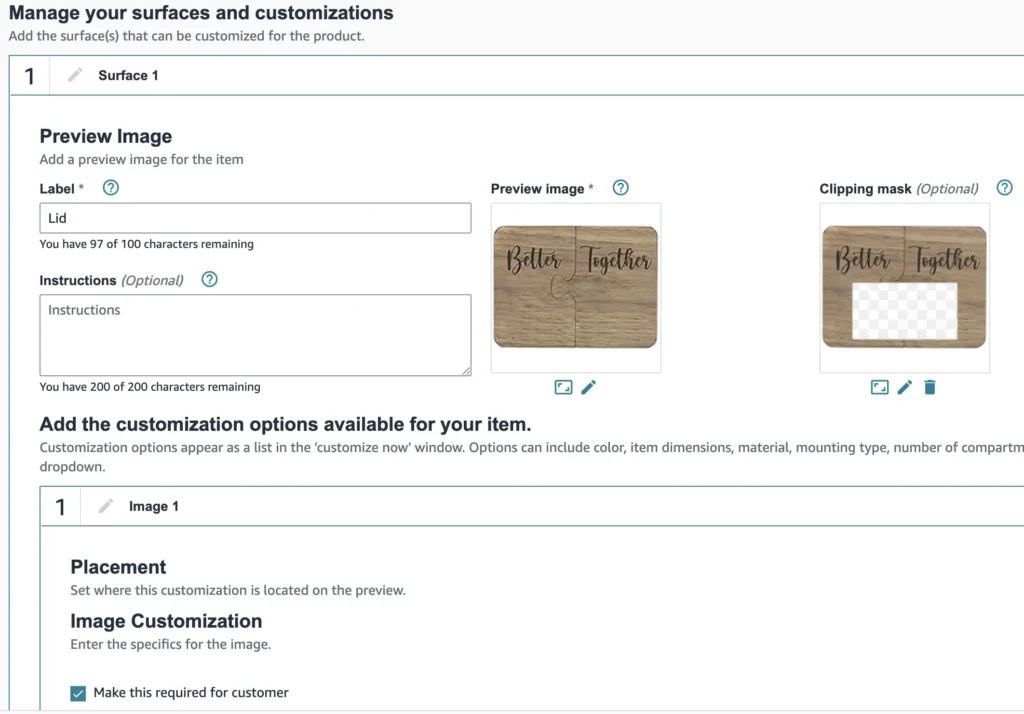
And here’s the part that’s easy to overlook: each of these options can be applied across up to five different “surfaces” of a product, and you can adjust the product price based on which options are selected. For personalized goods, this kind of configurability is a genuine advantage.
The Personalization Data Problem (And How to Solve It)
Here’s something almost no one talks about when they tell you to expand to Amazon: if you use order management software like ShipStation or Veeqo to handle fulfillment and label purchasing, there’s a good chance that software doesn’t automatically pull in Amazon’s personalization data.
That means if a customer orders a ring box engraved with their wedding date and initials, you might find yourself manually copying that information from Amazon into your order management system, for every single order. At scale, that becomes a serious time sink and a source of errors.
This is the exact problem I built CustomSync to solve. CustomSync integrates directly with your order management software and automatically imports the personalization data from Amazon, so the custom details arrive with the order. No copying, no pasting, no mistakes. If you’re selling personalized products on Amazon and using any kind of fulfillment software, it’s worth checking out.
What to Be Aware Of Going In
Amazon isn’t Etsy, and it’s worth going in with your eyes open:
Fees are higher. Amazon takes a larger cut than Etsy, so you’ll need to price your products accordingly. Run your numbers before you list.
Buyers expect fast shipping. Amazon has trained its customers to expect quick delivery, and your metrics are monitored more closely than on Etsy. You’ll need reliable fulfillment processes and enough inventory to keep up.
You’ll be held to a higher operational standard. Etsy is relatively forgiving. Amazon is not. Response times, order defect rates, and shipping performance all affect your seller health and your search ranking.
Is It Worth It?
For me, absolutely. Revenue doubled. And personalized products are a growing category in e-commerce. Buyers increasingly want things made specifically for them, and Amazon’s traffic gives you access to a much larger pool of those buyers.
If you can price your products to account for Amazon’s higher fees, build a fulfillment process that meets their standards, and set up the right tools to handle personalization data efficiently, the platform rewards you with visibility that Etsy simply can’t match.
The setup takes effort. The operational bar is higher. But if your products are good and your systems are solid, expanding to Amazon is one of the best growth moves an Etsy seller can make.
About the author
Nick and Laura Heady run brideandbow together, a personalized wedding accessories shop on Etsy and Amazon. Nick is also the creator of customsync.app.
Wherever you sell next, your Etsy shop should be pulling its weight first.
Listadum shows you which listings are actually earning and which are dragging, so you grow from a strong base instead of a leaky one.
Free plan · no credit card · connect your real Etsy shop in minutes