
By Neha Chandelier, co-founder of Listadum. Last updated June 7, 2026.
Part of our Etsy SEO guide. Pairs with Etsy tags and Etsy titles.
Your tags and title get you into search. Your photos decide whether anyone clicks, and whether they buy once they do.
That makes photos the most important thing most sellers under-invest in.
Here is the reframe that changes everything: a listing is not one photo, it is a whole gallery. Etsy now gives you up to 20 photo slots and 2 video slots (the photo limit doubled from 10 to 20 in 2025). That is a lot of room to answer every question a buyer has.
But more slots is only better if each one earns its place. So start with the 10 shots every listing needs, then build out from there.
Let me walk you through what each slot is for.
TL;DR
- You now get up to 20 photos and up to 2 videos. Etsy doubled photos from 10 to 20, and a second video slot is rolling out. Use as many as genuinely help the buyer.
- Start with the core 10. There are 10 shots every listing needs, each with a job: hero, in-use, scale, detail, variations, packaging, and so on.
- Your first photo is your thumbnail. It alone wins or loses the click in search.
- Use the extra slots and video with intention, not as filler. An empty slot beats a padded one.
- Quality basics still decide it: good light, sharp focus, clean background. Test your hero.
Why photos win or lose the sale
Think about how you shop on Etsy. You scan a grid of thumbnails. You click two or three. You buy one.
Every step there is a photo decision.
The thumbnail decides whether you click. The next nine photos decide whether you trust the maker enough to buy without holding the thing in your hands. Your buyer cannot touch your product, so the photos have to do all the reassuring.
So photos are not decoration. They are how you answer “is this real, is it good, will it look like this when it arrives.” Answer well and you convert. Leave gaps and the buyer fills them with doubt, then leaves.
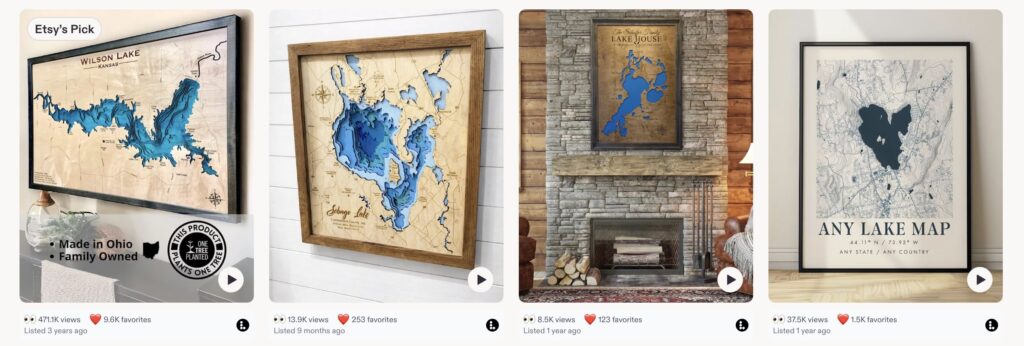
The 10-shot rule
Etsy now gives you up to 20 photo slots, but more is only better if each one earns its place. So start with these 10, the shots every listing needs, each with a specific job. This works for almost any physical product:
- 1. The hero shot. Your product, clean and clear, filling the frame on a simple background. This is your thumbnail, so it has to win the grid. Make it the strongest single image you have.
- 2. In use / lifestyle. The product being worn, held, or living in a real space. This is where the buyer pictures it in their own life.
- 3. Scale shot. The product next to something familiar (a hand, a coffee cup, a coin) so size is unmistakable. “It was smaller than I thought” is a top reason for returns and bad reviews. Kill it here.
- 4. Detail / close-up. Zoom in on the craftsmanship: the stitching, the glaze, the grain. This is where you justify a handmade price.
- 5. Different angle. Back, side, top. Show the parts a flat front shot hides.
- 6. Variations. If you offer colors, sizes, or styles, show them together so buyers see the full range.
- 7. Packaging. How it arrives, especially if it is gift-ready. This sells the gifting use and signals care.
- 8. Dimensions / spec graphic. A simple image with measurements or materials labeled. Removes the last practical objection.
- 9. Context or styling. The product paired with complementary items, or styled the way you would use it. Helps buyers imagine the whole look.
- 10. Brand or trust shot. A thank-you note, your maker’s mark, a “handmade in [place]” image. Small, but it builds the human trust that closes the sale.
You do not have to use these exact ten for every item. The rule is simpler than that: nail these core shots first, then add more only when they say something new.
Free Etsy Listing Image Playbook. This post covers the shots. The playbook lays out the full image sequence image by image, with the infographic, text-on-image, and safe-margin rules that make each photo read on mobile.
Got more than 10 slots? Here is what goes in 11 to 20
You have up to 20 photo slots now. You do not need to fill all 20, but if your product has range or detail, the extra room is a gift. Good uses for slots 11 to 20:
- More angles and close-ups. Every seam, clasp, texture, and finish a buyer would want to inspect.
- More variation shots. If you offer many colors or sizes, give the popular ones their own clear image instead of cramming them into one.
- Seasonal or styled sets. The same product staged for different rooms, seasons, or occasions.
- Soft infographics. Turn specs into clean, calm graphics: a size guide, what is included, care instructions. Soft and clear, never loud or corporate.
- Real customer photos and reviews. With permission, a couple of genuine in-the-wild shots, or a clean review screenshot, beat any studio image for trust.
The test never changes: would this image answer a question or close a doubt? If not, leave the slot empty. A tight gallery of 13 strong photos beats a padded 20.
Our free Etsy Listing Image Playbook lays out this full sequence image by image, with the infographic and text-on-image rules that make each one read on mobile.
Add video: you have two slots
Photos do most of the work, but video is the closest a buyer gets to holding your product. Etsy is rolling out a second video slot (some shops have it now), so you can add up to 2 videos per listing, and they autoplay in the gallery. A good one is a real edge.
Keep Etsy’s specs in mind:
- Length: 5 to 15 seconds. Short and looping.
- Silent. Etsy strips the audio, so tell the story with motion, not sound.
- Vertical or square reads best on mobile, where most of your buyers are.
Two videos worth shooting:
- The product in motion. A slow turn, light catching a glaze, fabric moving, a lid lifting. Show what a flat photo cannot.
- In use or unboxing. The item worn, opened, or used, so the buyer sees it in real life and gift-ready.
You do not need a studio. A steady phone, good light, and ten seconds of the product moving will lift a listing more than another near-identical photo.
Your first photo is your thumbnail
Of all your photos, the first one carries the most weight, because it is the only one most buyers ever see before deciding to click.
In the search grid, your hero shot is competing against dozens of others at thumbnail size. Styled and aesthetic is good here (Etsy is not Amazon, it does not want a plain white box), but it still has to read instantly:
- Fill the frame. A tiny product floating in empty space disappears at thumbnail size. Get close.
- One clear subject, minimal text. A busy hero with five props and a paragraph of text is noise when shrunk down. Keep it simple.
- Strong contrast. Your product should pop out, not blend into the background.
- Check it small. Shrink your hero to thumbnail size on your phone before you publish. If you cannot tell what it is in one second, neither can a buyer.
There is a deeper reason to obsess over this. Etsy shows your listing, a buyer clicks the image, and then either buys or favorites it, which tells Etsy to show you more. The golden signal at the end of that cycle is sales, not tags. So a strong thumbnail does not just win one click, it feeds the loop that wins you more. (More on how that ranking loop works.)
For a deeper dive on the click specifically, our guide to Etsy listing thumbnails goes shot by shot.
Quality basics that still decide it
Fancy gear is not the point. These fundamentals are, and they are mostly free:
- Natural light. Shoot near a window in daylight. It gives true colors and soft shadows, and it beats a phone flash every time.
- Sharp focus. Tap your phone screen on the product before you shoot. A blurry hero looks careless, and careless does not sell handmade.
- Clean, not bare. A styled background is fine, and often better on Etsy. Just keep it uncluttered so the focus stays on the product.
- High resolution. Etsy recommends at least 2000 pixels on the longest side, so listings stay crisp when buyers zoom in. If an older photo is too small, an image upscaler can rescue it rather than reshooting.
- Mind the safe margins. Etsy crops your thumbnail to a square, so keep key details and any text away from the edges, and big enough to read on a phone.
- Consistency. A shared light, background, and style across your shop reads as professional and makes your brand memorable.
None of this requires a studio. A window, a sheet of paper, and a steady phone will out-photograph most of your competition.
Test your hero image
You do not have to guess which hero works best. You can test.
- Swap and watch. Change only the first image, leave everything else, and watch your listing’s views and click-through over the next couple of weeks.
- Change one thing at a time. If you swap the hero, the angle, and the background at once, you will not know what moved the numbers.
- Use your own data. Etsy’s stats show views and visits per listing. A hero change that lifts visits without more traffic to the listing is a real win. (Our A/B testing guide walks through doing this cleanly.)
The hero is the single highest-leverage image in your shop. It is worth testing two or three before you settle.
Worked example: a thin 3-photo listing becomes a full set
Picture a macrame wall hanging with three photos:
- A front shot on a white wall.
- Another front shot, slightly closer.
- A folded flat-lay.
Three photos, two of them nearly identical, zero context. The buyer cannot tell how big it is, what it looks like in a room, or how it arrives.
Here is the same listing rebuilt to ten:
- 1. Hero: the hanging on a textured wall, filling the frame, styled but clean.
- 2. Lifestyle: above a couch in a real living room.
- 3. Scale: next to a standard door or a person, so size is obvious.
- 4. Detail: close-up of the knots and fringe.
- 5. Angle: side view showing depth.
- 6. Variations: the three colorways side by side.
- 7. Packaging: rolled and tied, gift-ready.
- 8. Dimensions: a labeled graphic with width and length.
- 9. Styling: paired with a plant and a shelf.
- 10. Trust: the “handmade in [town]” tag and a thank-you card.
Same product. Now every question a buyer has is answered before they have to ask. That is the difference between a listing that gets favorited and forgotten and one that gets bought.
That is a strong 10. With the extra slots, you could add a seasonal styling shot, two more color close-ups, and a ten-second video of the fringe moving in the light, and now you are using the full gallery the way Etsy intended.
FAQ
How many photos can you add to an Etsy listing?
Etsy now allows up to 20 photos per listing, doubled from 10 in 2025. You do not have to use all 20, but cover at least the core 10 shots, since each answers a different buyer question. Intentional shots beat empty slots or filler.
Can I add video to an Etsy listing?
Yes. Etsy is rolling out a second video slot, so you can add up to 2 videos per listing (some shops have it now), each 5 to 15 seconds, silent (Etsy removes the audio), autoplaying in the gallery. A short clip of your product in motion or in use is one of the easiest ways to stand out.
What should my first Etsy photo be?
A clean, frame-filling hero shot of the product on a simple background. The first image is your search thumbnail, so it has to win the click against every other listing in the grid. Keep it simple and check how it reads at thumbnail size.
What size should Etsy photos be?
Etsy recommends at least 2000 pixels on the longest side so images stay sharp when buyers zoom in. If an older photo is too small to reshoot, an image upscaler can increase its resolution rather than starting over.
Do better Etsy photos help my ranking, or just my conversion?
Both. Photos directly drive conversion, and a stronger thumbnail wins more clicks in search. Since Etsy ranks listings that earn clicks and sales more highly, better photos feed the loop that lifts your ranking too.
How do I show scale in an Etsy photo?
Place the product next to something familiar, like a hand, a mug, or a coin, or include a labeled dimensions graphic. “It was smaller than I expected” is a common cause of returns and poor reviews, and a single scale shot prevents it.
Should I test my Etsy product photos?
Yes. Swap only your first image, keep everything else the same, and watch your views and click-through over the next couple of weeks. Changing one thing at a time tells you exactly what moved the numbers.
Your photos are doing the selling. Make all ten count.
Listadum scores every listing, including whether you are using enough images, and suggests what to improve first, ranked by impact.
Free plan · no credit card · connect your real Etsy shop in minutes
Related: These listing image types that drive sales · How to create thumbnails that always work